Research guide · Croatia
Croatia: coast, islands, Plitvice, best time to visit, getting there and costs 2026
Planning Croatia: airport buses from €5, eight regions from Istria to Dubrovnik, Plitvice and Krka with 2026 prices, climate, tolls, rail and tourist tax.
By Nighthopper editorial teamCreated with AITranslated with AIPublished 11 min read
How this article was made
This English version was translated from the German original with AI and has not been reviewed by a person. The checks described here refer to the German original, which is authoritative.
Text created with AI and checked with AI against the sources listed. Approved by Simon Misiak on .
Editorially responsible: Saimon Misiaki (Simon Misiak).
At a glance
- Passengers from Germany: 1,432,391 in 2025, rank 14 of 211 destination countries abroad; most often to Zagreb (474,847) and Split (422,051) (own analysis, Destatis).
- Airport buses into the cities: Zadar €5, Pula €6, Zagreb €9, Split and Dubrovnik €10 each one way (as of September 2026).
- Plitvice 2026: day ticket for adults €10 from November to March, €40 from June to September, €25 in the afternoon in summer (2026 price list).
- Tolls instead of a vignette: car Zagreb–Split €26.40 (as of September 2026); according to ADAC, a toll system without barriers is to come gradually from September 2026, nationwide from 1 March 2027 (planned).
- Euro since 1 January 2023, the same time all year round as in Germany, and the emergency number 112 also takes calls in German (as of September 2026).
- Climate in Split: in July a mean daily high of 31.0 °C and only 24.6 mm of rain, wettest in November with 119.8 mm (WMO normals 1991–2020).
Croatia suits you if you want to combine a beach holiday on the Adriatic with old towns and national parks. Ten sites in the country are on UNESCO's World Heritage List (as of September 2026). Tourism is concentrated on the coast: in 2025, 94.3% of all overnight stays in commercial accommodation were in the Adriatic region (statistics office DZS).
A change is coming for tolls: according to ADAC, digital payment without stopping is planned, gradually from September 2026 and across the whole country from 1 March 2027. For the time being you still pay at toll stations with barriers.
Croatia suits you less if you want to go to the sea in winter: only 204 passengers flew from Germany to Zadar in January 2025, against 50,287 in August (own analysis, Destatis). If you do not cope well with heat, avoid July and August. Then the mean daily high in Split is 31.0 and 30.9 °C (WMO normals 1991–2020).
Getting there from Germany
From the 22 main German airports, exactly 1,432,391 passengers whose last known destination was in Croatia departed in 2025, rank 14 among 211 destination countries abroad. Connecting passengers abroad are not counted. Most went to Zagreb (474,847) and Split (422,051), followed by Zadar, Dubrovnik, Pula and Rijeka. The most important departure airports were Frankfurt (339,633) and Munich (269,793), followed by Berlin (142,437) and Weeze on the Lower Rhine (101,465). The source is the Federal Statistical Office, year 2025; totals, ranking and breakdown are own analysis.
Flight delayed or cancelled?Check whether you’re owed money under the EU air passenger rights regulation — with every step of the check in plain language.Zagreb (ZAG): shuttle bus for €9
It is 17 km from the airport to the centre. According to the tourist board, the Pleso Prijevoz shuttle takes 35 to 40 minutes to the bus station and costs €9.00; children under 7 travel free. According to the timetable it leaves between 6:00 and 22:30. Later, until 1:00, it is timed to the landings of Croatia Airlines and leaves 30 to 40 minutes after them (as of September 2026).
Split (SPU): Platanus shuttle for €10
From the airport in Kaštela it is 20 km to Split and only 6 km to Trogir. The Platanus shuttle times its departures to the arrivals. It sets off about half an hour after landing, without stopping, and takes around 30 minutes to the bus station. The single journey costs €10, the return €15, and children under six pay nothing (as of September 2026). The bus station is right by the railway station and the ferry port, and it is around five minutes on foot to the old town.
Caution
Split airport: allow 90 minutes to get there in summer
If you are flying from Split in summer, you should allow an hour and a half for the journey to the terminal. The airport itself advises this, because the traffic there can back up in these months (as of September 2026).
Zadar (ZAD): scheduled bus for €5
From the airport, which according to the operator is 8 km from the town, the Liburnija scheduled bus takes about 20 minutes to the peninsula in the centre. The journey costs €5.00 with luggage, and with the same ticket you can change to the city bus within 90 minutes (as of September 2026).
Dubrovnik (DBV) and Pula (PUY)
Dubrovnik airport is 22.5 km from the town. In summer the drive into the town can take an hour, otherwise 30 to 35 minutes on average. With the Platanus shuttle (single €10) you are at the Ploče Gate of the old town after about 30 minutes, and the terminus is Gruž bus station. In Pula, a shuttle for €6 takes you to the bus station 30 minutes after landing (as of September 2026).
Regions and destinations at a glance
Overnight stays: statistics office DZS, year 2025. Passengers from Germany: own analysis (Destatis, year 2025). Prices and times: as of September 2026.
| Region or place | Known for | Airport and getting there | Drawback |
|---|---|---|---|
| Zagreb | capital city, served by similarly many flights all year round | ZAG, shuttle €9 | in January on average −2.0 to 5.0 °C (1991–2020) |
| Istria (Pula, Rovinj, Poreč) | most overnight stays of all counties (28.3 million), Euphrasian Basilica in Poreč (UNESCO 1997) | PUY, shuttle €6 | only 119 passengers to Pula in January 2025 |
| Kvarner (Rijeka, Krk) | 15.5 million overnight stays, Krk via a toll-free bridge | RJK; bus from Zagreb airport daily 15:30 | only 582 passengers to Rijeka in total from January to April 2025 |
| Northern Dalmatia (Zadar, Šibenik) | city walls of Zadar (UNESCO 2017), Cathedral of Šibenik (UNESCO 2000), ferries to 17 inhabited islands | ZAD, bus €5 | Zadar has many flight destinations only from April to the end of October |
| Central Dalmatia (Split, Trogir, Hvar, Brač) | 18.4 million overnight stays, three World Heritage Sites, ferries to Hvar, Brač and Šolta | SPU, shuttle €10; Brač also by domestic flight | in July on average 31.0 °C (1991–2020) |
| Southern Dalmatia (Dubrovnik, Korčula, Pelješac) | old town of Dubrovnik (UNESCO 1979), toll-free Pelješac Bridge | DBV, shuttle €10; to Korčula/Orebić 140 km | in Dubrovnik 142.8 mm of rain in November (1961–2024) |
| Plitvice Lakes (Lika) | oldest and largest national park, 16 named lakes, UNESCO 1979 | car via D429 or A1 to Otočac | swimming prohibited |
| Slavonia (Osijek) | Osijek on the Drava, baroque old town centre Tvrđa | OSI, only 4,963 passengers in 2025 | 572 km to Zadar |
Swipe the table sideways to see all columns.
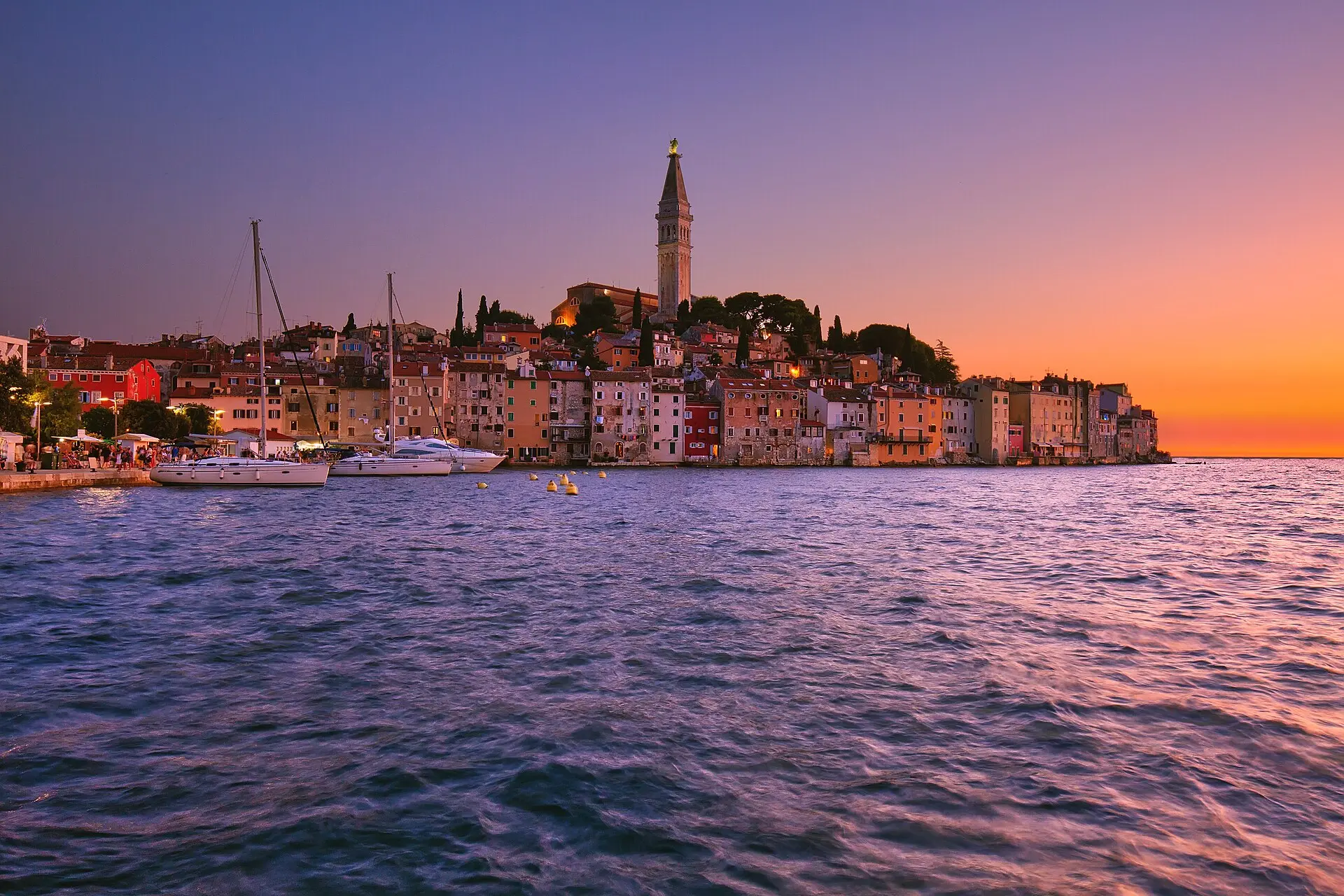
Istria accounted for 29.9% of all overnight stays in the country in 2025, 40.4% of them at campsites. Guests from Germany accounted for 10 million overnight stays there. No place recorded more overnight stays than Rovinj and Dubrovnik, which were level at 4.2 million each (DZS, year 2025).
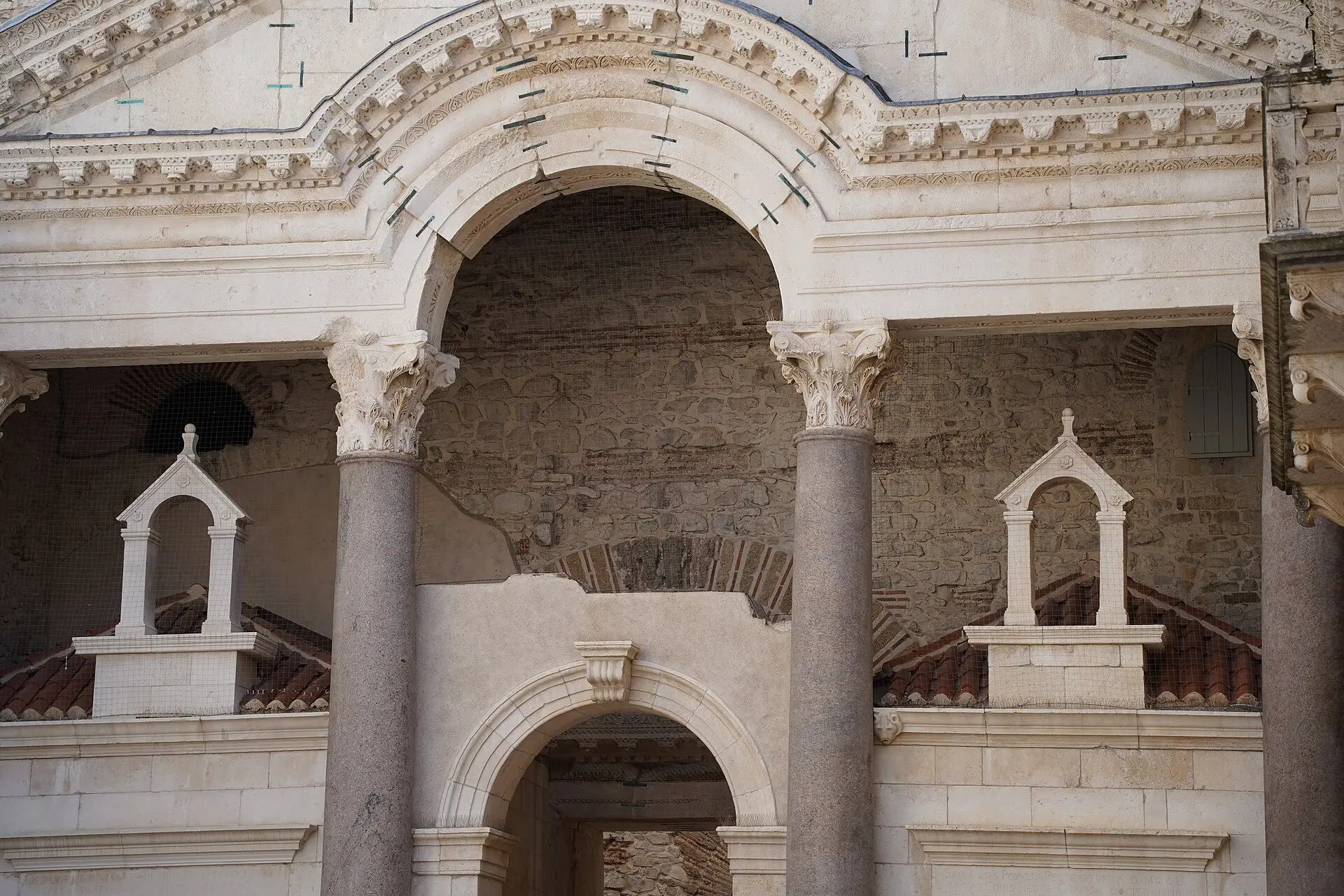
Central Dalmatia has three World Heritage Sites: Diocletian's Palace in Split (since 1979), the old town of Trogir (1997) and the Stari Grad Plain on Hvar (2008). The ferries to Hvar, Brač and Šolta leave from next to Split bus station.
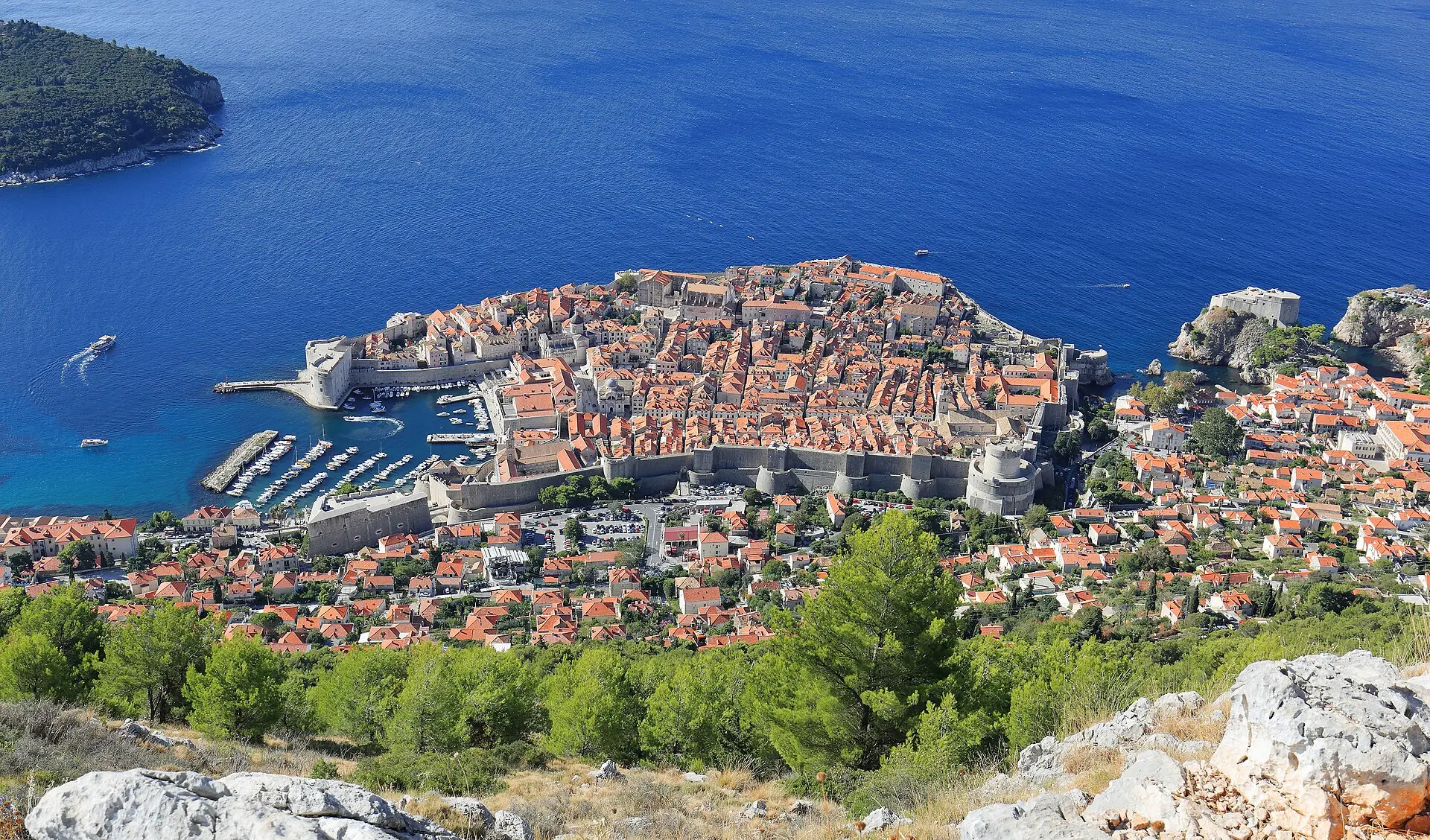
The 1,940 m long city wall of Dubrovnik includes six bastions, three fortresses and 16 towers. It is closed only on 25 December, and Lovrijenac Fortress is included in the wall ticket (as of September 2026).
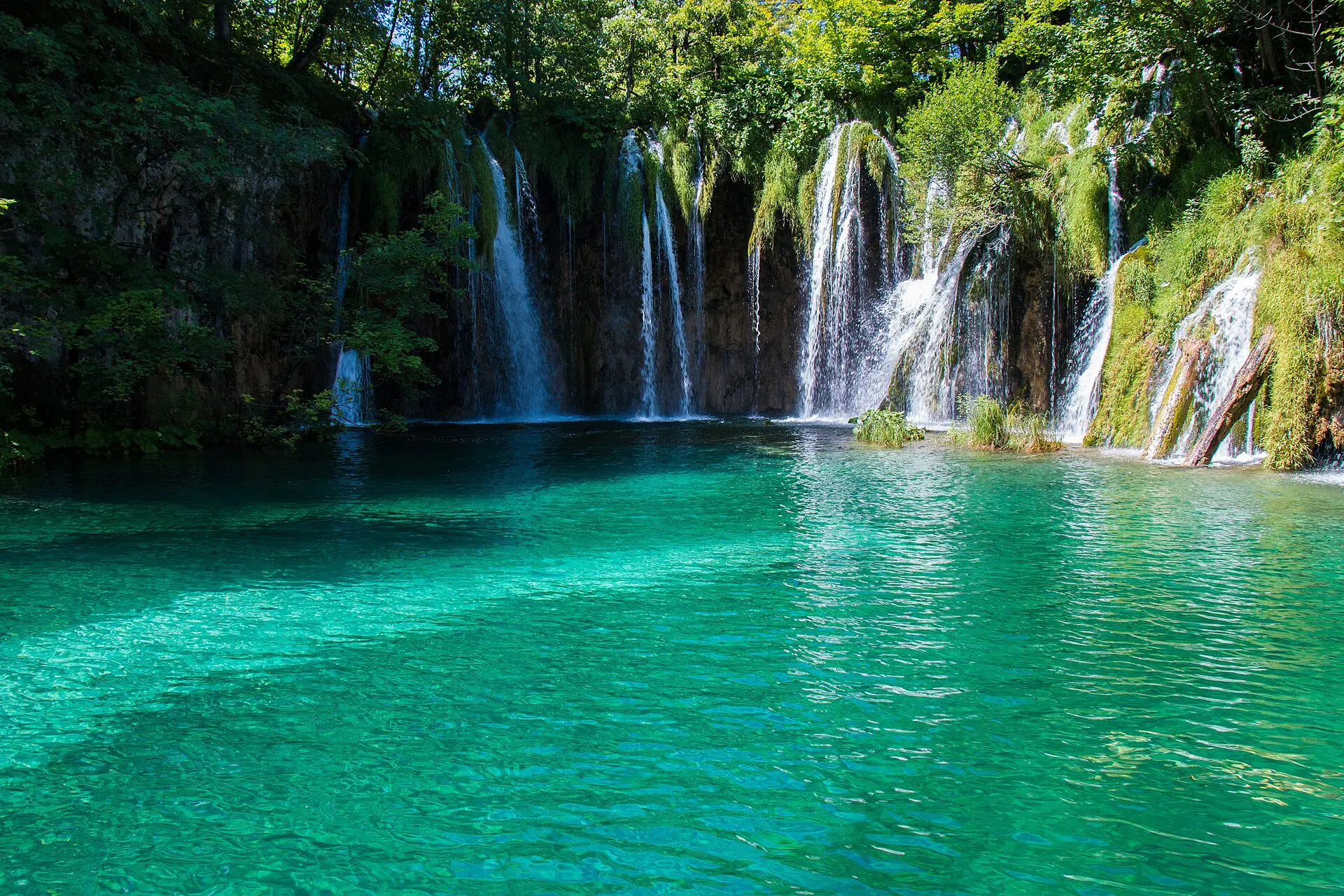
Plitvice has been a national park since 8 April 1949, the oldest in the country, and at just under 300 km² it is also the largest. Seven routes are available for the lakes. Entrances 1 and 2 are around 3 km apart and are currently open from 7:00 to 19:00, with the times changing according to the season (as of September 2026). Trips on the electric boat and panoramic train cost nothing extra (2026 price list).
Tip
Plitvice in winter for €10 instead of €40
In Croatia, the Plitvice and Krka national parks cost only a quarter or less of the summer price in winter. In 2026 adults pay €10 in Plitvice from November to March and €40 from June to September. For Krka it is €7 in winter instead of €40. In summer a late visit helps: Plitvice costs €25 from 16:00 from June to August and from 15:00 in September (2026 price lists).
Best time to visit
WMO climate normals 1991–2020, reported by Croatia to the WMO: mean high and low and precipitation per month.
| Month | Zagreb-Maksimir (123 m) | Split-Marjan (122 m) |
|---|---|---|
| January | 5.0 / −2.0 °C, 45.7 mm | 10.7 / 5.9 °C, 72.7 mm |
| February | 7.8 / −1.2 °C, 45.0 mm | 11.5 / 6.0 °C, 63.8 mm |
| March | 13.0 / 2.5 °C, 48.0 mm | 14.5 / 8.5 °C, 58.4 mm |
| April | 18.0 / 6.6 °C, 60.6 mm | 18.4 / 11.8 °C, 62.0 mm |
| May | 22.4 / 11.0 °C, 76.5 mm | 23.4 / 16.1 °C, 57.8 mm |
| June | 26.2 / 14.7 °C, 90.8 mm | 28.1 / 20.2 °C, 49.2 mm |
| July | 28.1 / 16.2 °C, 80.4 mm | 31.0 / 22.8 °C, 24.6 mm |
| August | 28.1 / 16.0 °C, 85.6 mm | 30.9 / 22.9 °C, 31.7 mm |
| September | 22.6 / 11.8 °C, 103.8 mm | 25.4 / 18.4 °C, 82.3 mm |
| October | 17.0 / 7.5 °C, 88.5 mm | 20.5 / 14.7 °C, 79.6 mm |
| November | 10.7 / 3.4 °C, 87.4 mm | 15.6 / 10.8 °C, 119.8 mm |
| December | 5.3 / −1.1 °C, 61.8 mm | 11.8 / 7.2 °C, 98.7 mm |
Swipe the table sideways to see all columns.
In Split only 24.6 mm of rain falls in July, and the sun shines for 359 hours. Over the year Split records 2,698 hours of sunshine, Zagreb 2,026. May, June and September bring highs of 23.4 to 28.1 °C in Split. The wettest month in Split is November, in Zagreb September.
Getting around the country
Rail and bus
The Zagreb–Split railway line measures 429 km, and there is an overhead line only as far as Oštarije. According to the HŽPP timetable (valid until 12 December 2026), the express train B 523 takes just under eight hours: from Zagreb 13:49, arriving in Split 21:47. In July 2024 HŽPP ordered six electro-diesel trains for the line. According to the schedule at the time, they will replace by the end of 2026 the tilting trains that have run there since 2004.
According to the Dubrovnik-Neretva Tourist Board, there are bus connections between the country's large towns every day. For buses and boats, it is best to reserve a few days ahead in summer. From Zadar and Biograd, 17 inhabited islands can be reached by ferry, catamaran or fast boat (as of September 2026).
Car and roads
Croatia has no vignette: on motorways you pay at toll stations, and expressways currently cost nothing. A car up to 1.90 m in height pays €26.40 from Zagreb to Split, €17.60 to Zadar-Centre and €10.10 to Rijeka (as of September 2026). You can pay in cash, by card or with an ENC device. With the device (€15 according to ADAC) you save 21.74% all year round, according to HAC. You drive over the bridges to Krk and to Pelješac without a toll.
Car hire at Split Airport (SPU)Latest price sample for each car class and rental company, plus the search for your travel dates.For cars, the limits are 50 km/h in built-up areas, 90 outside them, 110 on expressways and 130 on motorways. 0.5 per mille is permitted; anyone under 25 must stay at 0.0. From the beginning of November to the end of March, dipped headlights are compulsory in the daytime too. A high-visibility vest must be on board, and your German driving licence is enough (ADAC, as of September 2026).
Domestic flights
Croatia Airlines flies domestically between Zagreb, Split, Dubrovnik, Zadar, Pula, Brač and Osijek. A one-way flight from Zagreb in the Fly Easy fare costs from €53 to Pula and from €57 to Split, Dubrovnik or Brač. Airport charges are included, and the seats at these prices are limited (as of 26 September 2026).
Money and costs
Since 1 January 2023 you pay in euros in Croatia. In hotels, supermarkets and the towns, paying by card or phone usually works. According to ADAC, you should still carry cash, for example for trips into the countryside, small shops and restaurants (as of September 2026).
| Item | Price | As of |
|---|---|---|
| Airport bus Zadar / Pula / Zagreb | €5 / €6 / €9 | September 2026 |
| Platanus shuttle from Split or Dubrovnik | €10, €15 return | September 2026 |
| Domestic flight from Zagreb, one way | from €53 | 26 September 2026 |
| Motorway toll car Zagreb–Split | €26.40 | September 2026 |
| ENC toll device | €15 | September 2026 |
| Plitvice, adults: November to March / April, May, October / June to September | €10 / €23 / €40 | 2026 price list |
| Krka, adults, same periods | €7 / €20 / €40 | 2026 price list |
| Tourist tax Dubrovnik (commercial accommodation excluding camping), April to September / otherwise | €2.65 / €1.85 per person and night | 2026 |
Swipe the table sideways to see all columns.
The tourist tax is set by each county itself, in Zagreb by the city assembly, in each case within state lower and upper limits. In the town of Korčula in 2026, for example, it is €1.90 per person and night from April to September and otherwise €1.40 in commercial accommodation other than campsites. Private landlords pay an annual flat rate per bed instead.
Practical information
Croatia observes the same time as Germany all year round, and the official language is Croatian. The free emergency number 112 also takes calls in German and locates the caller; you can additionally reach the fire brigade on 193. The HAK motoring club provides breakdown assistance around the clock on +385 1 1987. According to ADAC, you do not need a travel adapter, as the mains supply is 230 volts and 50 hertz. Because Croatia is part of the EU, your phone costs you nothing extra there thanks to “Roam like at home” (as of September 2026).
Public holidays include Statehood Day on 30 May, 22 June, 5 and 15 August and 1 and 18 November. In 2026 Easter Monday falls on 6 April and Corpus Christi on 4 June (own calculation).
Tip
Shopping: Saturday instead of Sunday
On Sundays and public holidays shops in Croatia are in principle closed, but each trader may open on 16 Sundays a year of their own choosing (Trade Act, since 1 July 2023). Exempt are, among others, shops in railway stations, airports, ports and at petrol stations. You are therefore better off doing your weekend shopping on Saturday.
What applies on entry, safety and health is currently set out by the German Foreign Office.
Entry requirements and safety
The rules that apply are published by the German Federal Foreign Office — always up to date there.
Travel and safety advice: Croatia (in German) (opens in a new tab)Who Croatia is not for
- Anyone looking for peace and quiet in summer: In 2025, 94.3% of overnight stays were on the Adriatic. In July 2025, with 209,834, the most passengers flew from Germany to Croatia (own analysis).
- Anyone who does not cope well with heat: In Split the mean high is 31.0 °C in July and 30.9 °C in August (1991–2020).
- Anyone who wants to go to the coast in winter: Only 119 passengers flew from Germany to Pula in January 2025. In Plitvice most restaurants close in the winter half-year.
- Anyone travelling by car in summer: ADAC warns of waiting times at the toll stations, and from Dubrovnik airport into the town it can take an hour.
- Anyone who wants to shop on Sundays: The shops are in principle closed.
- Anyone who wants to swim in the national park: Swimming is prohibited in Plitvice.
Sources and last update
- Statistical report on air traffic at main airports, July 2026, table 46421-09 “Boarding passengers by destination airport (last known destinations)” (Federal Statistical Office (Destatis), in German) (opens in a new tab), accessed 26 September 2026
- TUR-2025-1-2 Dolasci i noćenja turista u komercijalnom smještaju u 2025. (Državni zavod za statistiku) (opens in a new tab), accessed 26 September 2026
- Croatia – States Parties (UNESCO World Heritage Centre) (opens in a new tab), accessed 26 September 2026
- Tolls and vignette in Croatia (ADAC, in German) (opens in a new tab), accessed 26 September 2026
- New trains connecting Zagreb and Split (HŽ Putnički prijevoz) (opens in a new tab), accessed 26 September 2026
- Vozni red za unutarnji promet 2025/2026, table 70 Zagreb–Split (HŽ Putnički prijevoz, PDF) (opens in a new tab), accessed 26 September 2026
- WMO Climate Normals 1991–2020, Zagreb-Maksimir 14240 (WMO/DHMZ, NOAA NCEI archive) (opens in a new tab), accessed 26 September 2026
- WMO Climate Normals 1991–2020, Split-Marjan 14445 (WMO/DHMZ, NOAA NCEI archive) (opens in a new tab), accessed 26 September 2026
- Srednje mjesečne vrijednosti i ekstremi: Dubrovnik (Državni hidrometeorološki zavod) (opens in a new tab), accessed 26 September 2026
- Vozni red – Zagreb (Pleso prijevoz) (opens in a new tab), accessed 26 September 2026
Show all 45 sources
- Arrival by plane (Tourist Board of the City of Zagreb) (opens in a new tab), accessed 26 September 2026
- To & from the airport (Zračna luka Split) (opens in a new tab), accessed 26 September 2026
- Split Airport Shuttle (Platanus) (opens in a new tab), accessed 26 September 2026
- Kako do nas (Zračna luka Zadar) (opens in a new tab), accessed 26 September 2026
- Kako do nas (Zračna luka Dubrovnik) (opens in a new tab), accessed 26 September 2026
- Dubrovnik Airport Shuttle Bus (Platanus) (opens in a new tab), accessed 26 September 2026
- Shuttle bus (Zračna luka Pula) (opens in a new tab), accessed 26 September 2026
- Travel information (Turistička zajednica Dubrovačko-neretvanske županije) (opens in a new tab), accessed 26 September 2026
- How to get there (Turistička zajednica Zadarske županije) (opens in a new tab), accessed 26 September 2026
- UNESCO heritage (Turistička zajednica Zadarske županije) (opens in a new tab), accessed 26 September 2026
- Our destinations in Croatia (Croatia Airlines) (opens in a new tab), accessed 26 September 2026
- Croatia – EU country profile (European Union) (opens in a new tab), accessed 26 September 2026
- General information (NP Plitvička jezera) (opens in a new tab), accessed 26 September 2026
- Price list 2026 (NP Plitvička jezera) (opens in a new tab), accessed 26 September 2026
- Hours of operation (NP Plitvička jezera) (opens in a new tab), accessed 26 September 2026
- How to get here (NP Plitvička jezera) (opens in a new tab), accessed 26 September 2026
- Rules of conduct (NP Plitvička jezera) (opens in a new tab), accessed 26 September 2026
- Cijena ulaznice za sve kopnene lokalitete 2026 (JU Nacionalni park Krka, PDF) (opens in a new tab), accessed 26 September 2026
- The City Walls (Društvo prijatelja dubrovačke starine) (opens in a new tab), accessed 26 September 2026
- FAQ (Društvo prijatelja dubrovačke starine) (opens in a new tab), accessed 26 September 2026
- Zagreb ⇄ Rijeka (Pleso prijevoz) (opens in a new tab), accessed 26 September 2026
- Toll rates A1, A6, A10 – Entry: Zagreb (Hrvatske autoceste) (opens in a new tab), accessed 26 September 2026
- Toll (Hrvatske autoceste) (opens in a new tab), accessed 26 September 2026
- Toll FAQ (Hrvatske autoceste) (opens in a new tab), accessed 26 September 2026
- Croatia: vehicle, traffic rules, driving licence (ADAC, in German) (opens in a new tab), accessed 26 September 2026
- Croatia: currency, mains voltage and everything worth knowing (ADAC, in German) (opens in a new tab), accessed 26 September 2026
- Roaming: what you pay to use your smartphone in another EU country (Your Europe, EU) (opens in a new tab), accessed 26 September 2026
- Broj 112 (Ravnateljstvo civilne zaštite, MUP) (opens in a new tab), accessed 26 September 2026
- Useful information for visitors of Istria (Istria Tourist Board) (opens in a new tab), accessed 26 September 2026
- Zakon o blagdanima, spomendanima i neradnim danima u Republici Hrvatskoj, NN 110/2019 (Narodne novine) (opens in a new tab), accessed 26 September 2026
- Zakon o izmjenama i dopuni Zakona o trgovini, NN 33/2023 (Narodne novine) (opens in a new tab), accessed 26 September 2026
- Odluka o visini turističke pristojbe za 2026. godinu (Dubrovačko-neretvanska županija, PDF) (opens in a new tab), accessed 26 September 2026
- Pravilnik o najnižem i najvišem iznosu turističke pristojbe, NN 71/2019 (Narodne novine) (opens in a new tab), accessed 26 September 2026
- HAK – Traffic information and breakdown service (Hrvatski autoklub) (opens in a new tab), accessed 26 September 2026
- Croatia: travel and safety advice (German Foreign Office, in German) (opens in a new tab), accessed 26 September 2026
Information last checked on 28 September 2026.
Found a mistake? Write to us — we’ll correct it and note it here.