Research guide · Prague
Prague: neighbourhoods, sights, getting there and tickets at a glance
Which Prague neighbourhood suits you, how to get from the airport by trolleybus 59 and metro, which ticket pays off and how to avoid currency exchange traps.
By Nighthopper editorial teamTranslated with AIPublished 12 min read
How this article was made
This English version was translated from the German original with AI and has not been reviewed by a person. The checks described here refer to the German original, which is authoritative.
Fact-checked by Simon Misiak on .
Editorially responsible: Saimon Misiaki (Simon Misiak).
At a glance
- PRG airport approx. 12 km west: trolleybus 59 plus Metro A take approx. 35 minutes to the centre
- Train instead of flight: from Dresden 2 hrs 5 min, from Berlin 3 hrs 47 min (as of September 2026)
- Best time to visit: May and September with an average daily high of around 20 °C, quietest in January and February
- Currency koruna (CZK), not the euro; card payment widespread, the German Foreign Office advises cashless payment
- Public transport: 24-hour ticket 140 CZK, 72 hours 340 CZK in the app (as of September 2026)
- Not for you if you dislike crowds or hills: August is busiest, Castle Hill and Petřín are on slopes
Getting there from Germany
Airport: Prague (PRG)
| From | As the crow flies | Compensation up to |
|---|---|---|
| Frankfurt (FRA) | 407 km | €250 |
| Munich (MUC) | 265 km | €250 |
| Berlin (BER) | 257 km | €250 |
| Düsseldorf (DUS) | 544 km | €250 |
| Hamburg (HAM) | 490 km | €250 |
Compensation per person under the EU air passenger rights regulation (Regulation (EC) No 261/2004) if the flight arrives 3 hours late or more, or is cancelled less than 14 days before departure — not in extraordinary circumstances such as severe weather. Check whether you’re owed anything →
- Time difference:
- same time as in Germany
Straight-line distance: our own calculation from airport data (OurAirports).
Prague is the capital of the Czech Republic, lies on the Vltava and has around 1.4 million inhabitants; the historic centre has been a UNESCO World Heritage Site since 1992. The city suits you if you want to explore the castle, bridges and towers on foot and are looking for a short journey: from Dresden the train takes a good two hours. January and February are quietest, and August is busiest.
Getting there and from the airport into the city
Václav Havel Airport (PRG) is about 12 km west of the centre. Flights from Germany land at Terminal 2 for the Schengen area. There is no rail connection yet (as of September 2026); you get into the city by trolleybus, bus or taxi. The “At a glance” box shows the straight-line distance and compensation for delays.
Trolleybus 59 and Metro A: the inexpensive standard route
The former bus line 119 no longer exists; since 6 March 2024, trolleybus 59 with its own luggage area runs instead. It takes about 15 minutes to Nádraží Veleslavín, where you change to the green Metro A towards the centre; according to the transport association PID, the whole journey takes about 35 minutes. PID recommends the 90-minute ticket for 46 CZK in the app or 50 CZK on paper (as of September 2026).
You buy the ticket before boarding from the machine in the arrivals hall or at the stop, mostly contactless, or in the app “PID Lítačka”. A paper ticket you validate at the bus stand.
Airport Express: without a change to the main station
The Airport Express (AE) takes about 40 minutes, depending on traffic, to the main station Praha hlavní nádraží, where you can change to Metro C. Its stop is on Wilsonova in front of the historic Fanta building. The ticket costs 200 CZK (as of September 2026), luggage up to 90 × 60 × 40 cm travels free, and PID tickets are not valid. In the 2026 summer timetable the AE runs every 20 minutes during the day; according to PID, line 59 with Metro A is often similarly fast, runs much more frequently and costs only the normal PID fare.
At night and by taxi
The metro runs from about 05:00 to 24:00. After that, night buses 907 and 910 take you every 30 minutes from Terminal 2 to the centre in 45 to 50 minutes without a change. The official taxi service at the airport is “Uber Airport”: you book via the app, at the kiosk or at the counter (07:00 to 21:00) and give the driver a six-digit PIN. The city's maximum prices apply only to taxis with a taximeter; since 1 August 2026 these are a 70 CZK base fare and 42 CZK per kilometre.
Flight delayed or cancelled?Check whether you’re owed money under the EU air passenger rights regulation — with every step of the check in plain language.By train from Germany
By train there is no journey from the airport to make. The fastest connections according to Deutsche Bahn (as of September 2026), partly different at weekends:
| Start | fastest journey | Direct trains |
|---|---|---|
| Dresden | 2 hrs 5 min | up to 7 per day |
| Berlin | 3 hrs 47 min | up to 5 per day |
| Nuremberg | 4 hrs 41 min | none, at least 1 change |
| Munich | 5 hrs 37 min | up to 7 per day (“alex”) |
Swipe the table sideways to see all columns.
Where to stay: the neighbourhoods compared
Until 1784, Hradčany, the Lesser Town, the Old Town and the New Town were four independent towns. If you want to stay close to the castle and Charles Bridge, look there; Vinohrady, Žižkov and Holešovice lie east and north of it.
| Neighbourhood | Location | Suits | Drawback |
|---|---|---|---|
| Old Town with Josefov | right bank around Old Town Square; Metro A Staroměstská | short distances to the Orloj, Charles Bridge, Jewish Museum | tourist area, beware of currency exchange offices |
| Lesser Town and Hradčany | left bank below and around the castle; Metro A Malostranská | castle, noble palaces, viewpoints, Petřín | hillside location, hard work with a suitcase |
| New Town | around Wenceslas Square and Charles Square | large squares, Vltava embankment at the Dancing House | Wenceslas Square with the most pedestrian traffic in the country |
| Vinohrady and Žižkov | east of the centre; Metro A Jiřího z Poděbrad | cafés, wine bars, parks; pubs and clubs | hilly, metro to the castle |
| Holešovice | Vltava bend in the north, next to the Letná plateau | art, market hall, studios and cafés in old factories | further from the historic core |
Swipe the table sideways to see all columns.
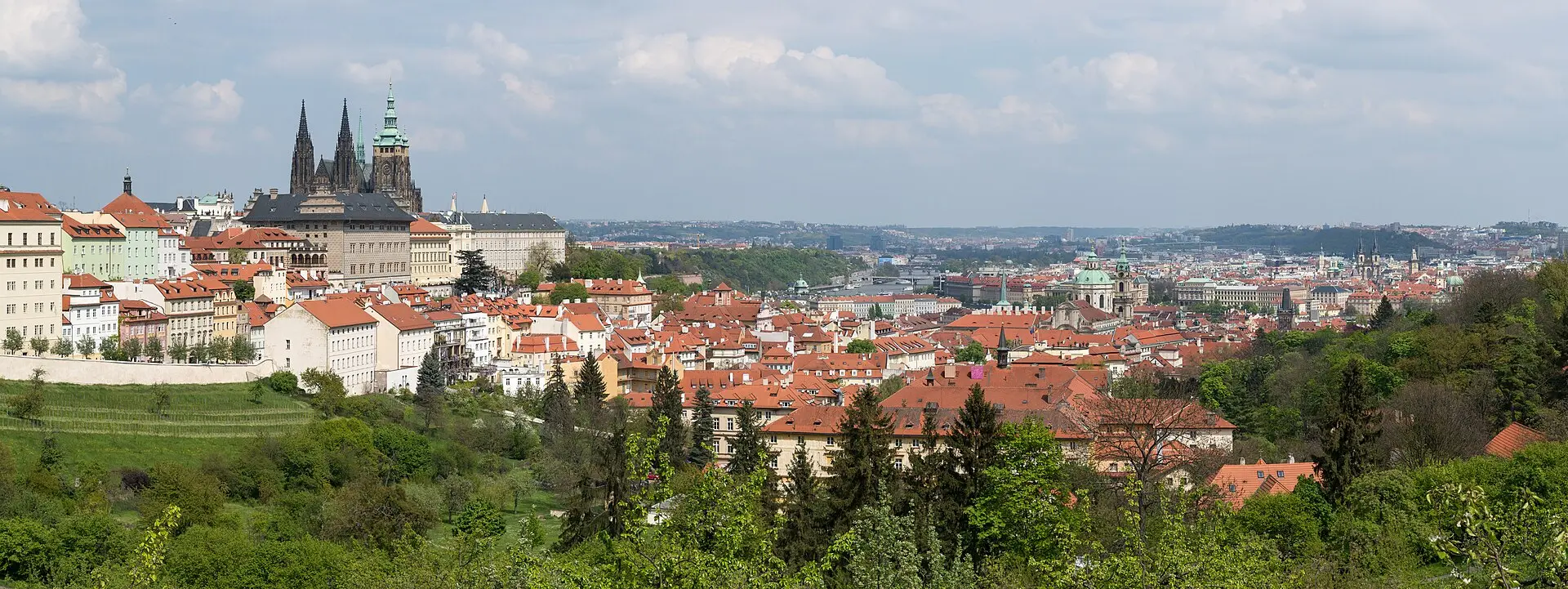
The name Vinohrady recalls the vineyards of Charles IV from the 14th century, and a vineyard still exists today in Havlíčkovy sady park. Living here is expensive, but the neighbourhood has many wine bars, cafés and good restaurants. Žižkov was a town in its own right until 1922, named after the Hussite leader Jan Žižka, and is regarded as a pub and club district. In Holešovice, formerly an industrial and port district, the Holešovice Market is in the former slaughterhouse; its Hall 22 is the largest food market in Prague.
Sights by area
Prague is called the “City of a Hundred Spires”, yet the Old Town alone now has 132 towers. You will find opening hours here and admission prices under Costs (as of September 2026).
Castle Hill: Prague Castle and St Vitus Cathedral
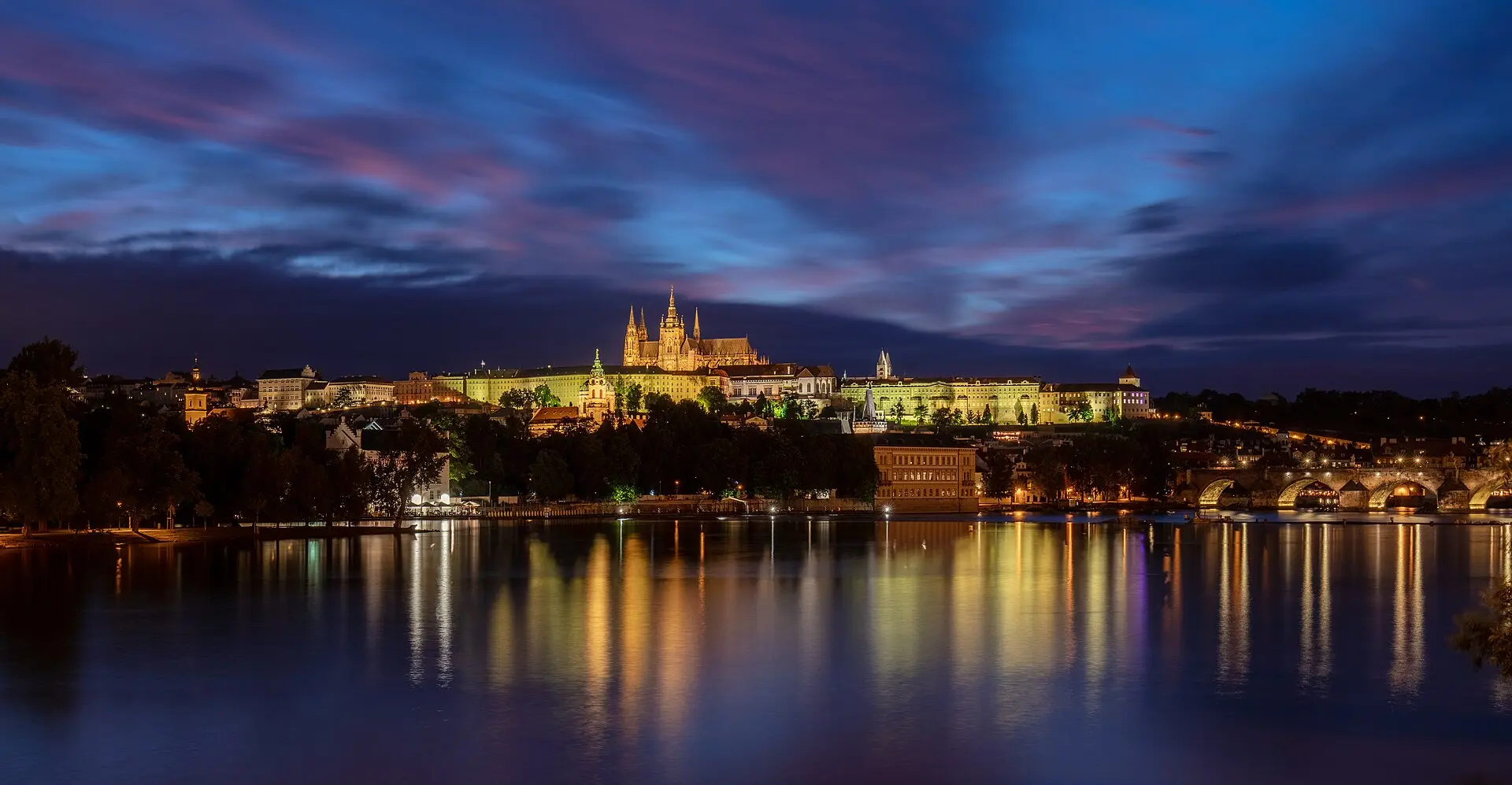
According to the Guinness Book of Records, Prague Castle is the largest ancient castle complex in the world, around 570 m long. It was founded in the 9th century, was the seat of the Bohemian kings and has been the seat of the president since 1918. In the grounds stands the Gothic St Vitus Cathedral, the largest church in the Czech Republic.
The grounds are freely accessible daily from 06:00 to 22:00; the historic buildings open from April to October from 09:00 to 17:00. The basic circuit with St Vitus Cathedral, St George's Basilica and Golden Lane is valid for two days; the Old Royal Palace, which is otherwise included, remains closed until 1 October 2026. It is better to leave bulky luggage at the hotel, as spot checks are carried out at the entrance.
Lesser Town: Charles Bridge and Petřín
Charles Bridge was begun in 1357 under Charles IV, is 516 m long and was the city's only crossing of the Vltava until 1841. Most of its 30 statues of saints are now copies. The best known, the bronze John of Nepomuk of 1683, still stands as the original.
Petřín, 327 m high, rises above the Lesser Town. Its lookout tower of 1891 is modelled on the Eiffel Tower at a scale of 1:5, has 299 steps and opens in September from 09:00 to 19:00.
Since 22 September 2026 the funicular has been running up the hill again. It stood still for around two years: after heavy rain in September 2024 the slope threatened to slide, and the whole route was then renewed. With a 24- or 72-hour ticket you ride at no extra charge.
Old Town and Josefov: Orloj and Jewish Quarter
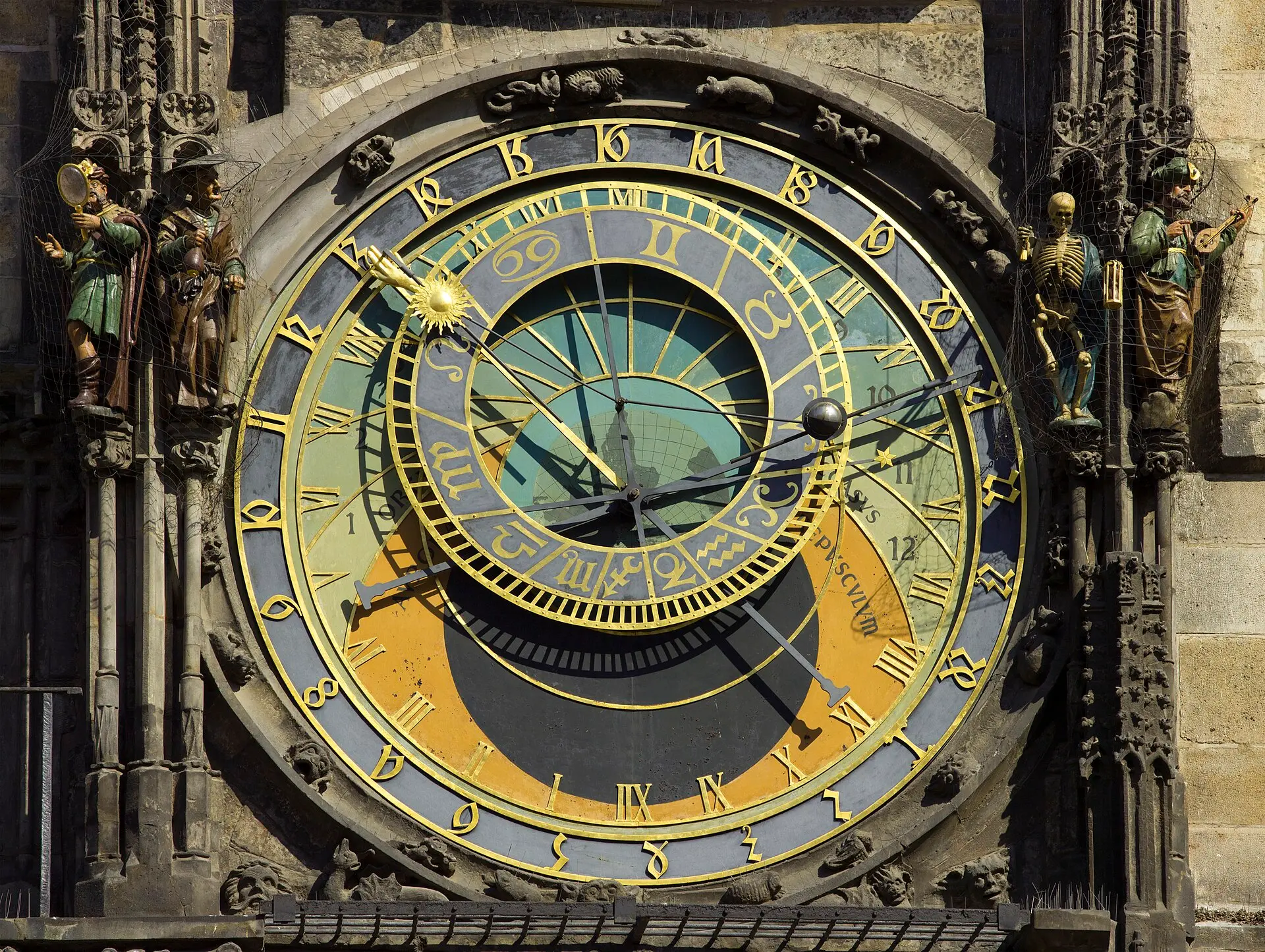
The Old Town Hall was founded in 1338, and its astronomical clock (Orloj) is among the three oldest still running in Europe. It shows the procession of the Apostles every hour from 08:00 to 23:00, and you can climb the Town Hall tower daily from April to December from 09:00 to 20:00.
Tip
First hour at half price
At the Town Hall tower and the Petřín lookout tower you pay 50 % less in the first hour after opening. At Petřín in September that means 09:00 to 10:00 for 125 instead of 250 CZK.
In Josefov stand the Old New Synagogue, the oldest still active synagogue in the world, and the Old Jewish Cemetery, the best-preserved Jewish cemetery in Europe. The combined ticket of the Jewish Museum is valid for five synagogues and the cemetery on three opening days; allow two to three hours. It is closed on Saturdays and Jewish holidays, in 2026 for example on 27 September and 4 October.
New Town and Vyšehrad
Charles IV founded the New Town in 1348, and its main axis is Wenceslas Square. At 79,650 m², Charles Square is among the largest squares in Europe. On Rašínovo embankment stands the Dancing House (“Ginger & Fred”), built from 1992 to 1996 to plans by Vlado Milunić and Frank O. Gehry.
A good 3 km south-east of the castle lies the Vyšehrad fortress on a rocky spur on the right bank. Dvořák and Smetana are buried in its cemetery, and in the Gorlice Hall of the casemates stand six original Baroque statues from Charles Bridge.
Žižkov and Holešovice: tower and art
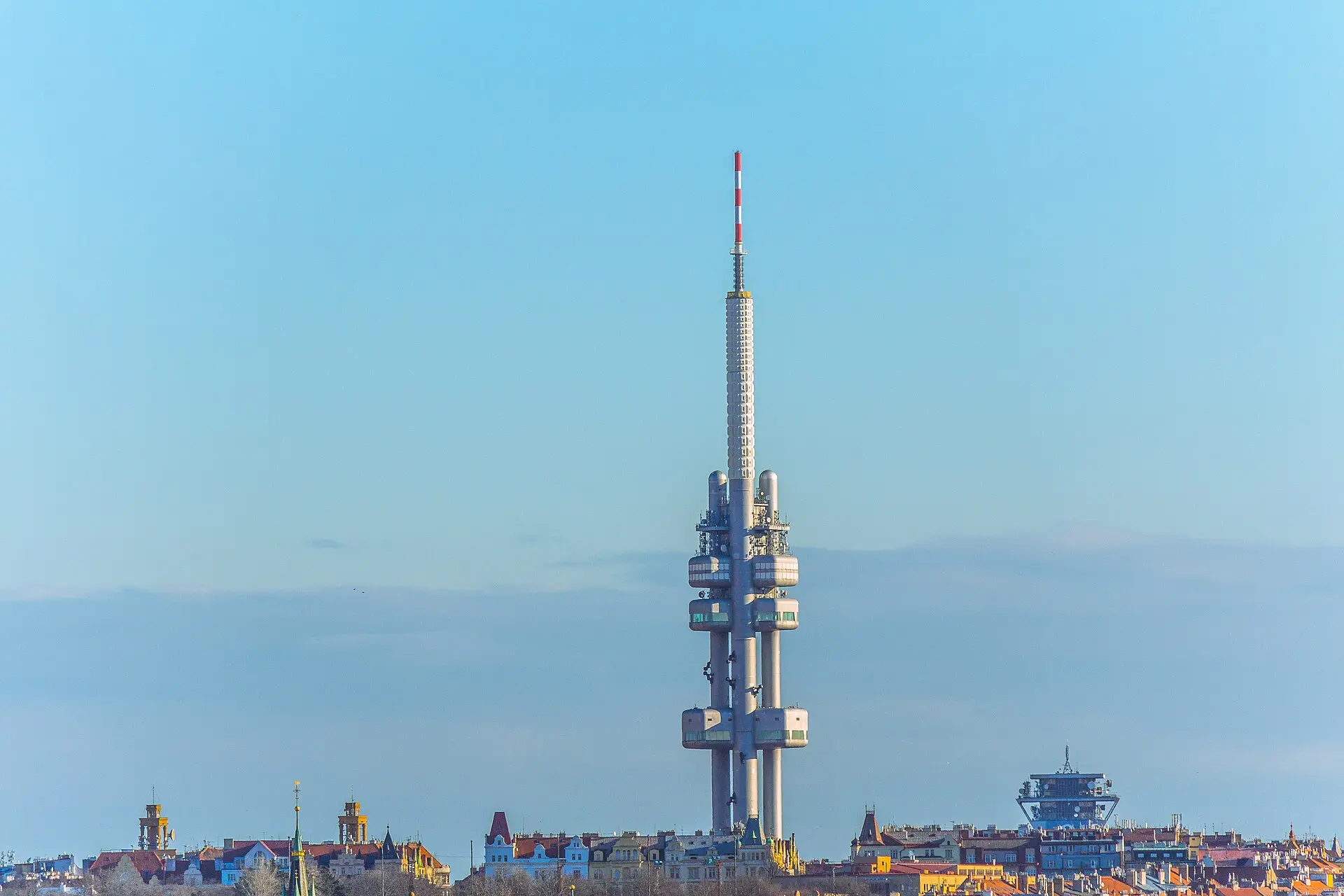
At 216 m, the Žižkov Television Tower is the tallest structure in Prague, built from 1985 to 1992. Ten baby sculptures by David Černý belong to it, and it is open daily from 09:00 to 24:00. In Holešovice the National Gallery has its headquarters in the Trade Fair Palace (Veletržní palác), alongside the National Technical Museum and DOX, a centre for contemporary art.
Food and drink
Bread dumplings and potato dumplings are on virtually every Czech menu, for example with svíčková (roast beef in cream sauce), with duck and two kinds of cabbage, or with goulash. In the pub there is smažený sýr (breaded, deep-fried cheese with tartare sauce) and utopenec, sausage pickled in vinegar.
When it comes to beer, the Czech Republic leads: in 2024 consumption was 148.8 litres per head, for the 32nd time in a row first place worldwide. A smoking ban applies nationwide in restaurants and bars.
Best time to visit
Prague is dry; in the rain shadow of the low mountain ranges only about 454 mm of precipitation falls per year. The table shows averages for 1991 to 2020 from the Klementinum station, which has been measuring daily since 1775 (weather service ČHMÚ):
| Month | Avg. daily maximum | what to expect |
|---|---|---|
| January | 3.9 °C (at night −0.5 °C) | dry, little sun, few crowds |
| May | 20.9 °C | start of the wettest months, often thunderstorms |
| July | 26.5 °C (at night 16.6 °C) | 229 hours of sunshine, recently more days above 30 °C |
| September | 20.4 °C | 168 hours of sunshine |
Swipe the table sideways to see all columns.
In 2025 there were 8.27 million overnight guests, a record; the biggest source market was Germany with 981,800 guests. August (just under 800,000) and December (790,233) were busiest; this time the Christmas market on Old Town Square runs from 28 November 2026 to 6 January 2027. January and February were each just under 500,000, and the tourism office itself advises coming outside the main season.
For city strolls, May and September with average highs of around 20 °C are best; September also falls after the peak month of August. Anyone who finds quiet more important than warmth should go in January or February.
Costs
The National Bank set the rate on 23 September 2026 at €1 = 24.380 CZK, so 100 CZK is a good €4.10. The euro values are converted and rounded accordingly (as of September 2026):
| Item | Price | approx. |
|---|---|---|
| Castle, basic circuit | 450 CZK | €18.50 |
| Jewish Museum, combined ticket | 600 CZK | €24.60 |
| Town Hall tower | 350 CZK | €14.40 |
| Petřín lookout tower | 250 CZK | €10.30 |
| Žižkov Television Tower | 350 CZK | €14.40 |
| Tourist tax per person per day | 50 CZK | €2.10 |
Swipe the table sideways to see all columns.
The tax is charged per day begun, except on the day of arrival; under-18s are exempt. The Prague Visitor Pass (opens in a new tab) costs 2,700, 3,300 or 3,900 CZK for 48, 72 or 120 hours and bundles over 70 offers with free admission or a discount as well as public transport. The castle basic circuit, Jewish Museum, Town Hall tower and Petřín tower cost 1,650 CZK together when bought individually, or 1,990 CZK with a 72-hour ticket from the app; the pass therefore only pays off if you use significantly more.
Practical information
Money: koruna, card and exchange offices
The Czech Republic uses the koruna (CZK, Kč), not the euro. Card payment and ATMs are widespread, and the German Foreign Office advises paying cashless and carrying only the day's needs in cash. According to the National Bank, a commission on currency exchange is prohibited, except for coins and cheques, and the exchange office must issue you a receipt.
Caution
Exchange offices: look at the right column
Exchange offices set their rates freely. The posted rate is from the exchange office's point of view: under “buy” is the rate at which you hand over euros and receive korunas. Before handing anything over, ask how many korunas you will actually receive for your amount, because, according to the German Foreign Office, in tourist areas the big advertising sign sometimes shows the rate for the opposite direction. If “buy” and “sell” are several korunas apart, the National Bank advises caution. Never exchange privately on the street, where counterfeit money and worthless banknotes are a risk.
Tip
Three hours' right of withdrawal on exchanges
Take the receipt back to the same exchange office, at the latest three hours after the exchange. Up to a countervalue of €1,000 it must reverse the transaction free of charge, and you do not have to give any reason. If it refuses, you can complain in writing to the National Bank or involve the financial arbitrator.
Public transport: which PID ticket
The metro has three lines: A (green), B (yellow) and C (red). Prices for adults aged 15 to 60 according to PID (opens in a new tab) (as of September 2026):
| Validity | App | Paper |
|---|---|---|
| 30 minutes | 36 CZK | 39 CZK |
| 90 minutes | 46 CZK | 50 CZK |
| 24 hours | 140 CZK | 150 CZK |
| 72 hours | 340 CZK | 350 CZK |
Swipe the table sideways to see all columns.
The 24-hour ticket pays off from the fourth journey per day. Like the 72-hour ticket, it is valid on the metro, tram, bus, ferry and train within Prague, but not on the AE.
There are no group tickets. Children up to 10 years travel free without proof, and children from 10 to 15 years also travel free, but then only with proof of age such as a passport.
You validate a paper ticket only once in the yellow validator; a second stamp makes it invalid. App tickets are valid only 60 seconds after purchase. Without a valid ticket you pay 2,000 CZK, or 1,200 CZK if you pay directly at the inspection.
Electricity, city rules and help
The sockets are type C and E with 230 V. According to the tourism office, quiet hours apply from 22:00, and disturbing the peace costs up to €400. You can reach the tourist information on +420 221 714 714, and the emergency number is 112. The current rules on entry, safety and health are available from the German Foreign Office, as are the current alcohol bans in public spaces.
Entry requirements and safety
The rules that apply are published by the German Federal Foreign Office — always up to date there.
Travel and safety advice: Czech Republic (in German) (opens in a new tab)Who this is not for
- Anyone who avoids crowds should skip August and December: in 2025 each had just under 800,000 overnight guests, and the German Foreign Office also warns of pickpockets.
- Anyone who finds walking difficult will have a hard time on Castle Hill, Petřín and in hilly Vinohrady; with a suitcase, Metro A to Malostranská is more comfortable.
- Anyone looking for sun in winter will hardly find it: in December there are on average 46 hours of sunshine, plus frequent fog.
- Anyone who copes badly with heat should avoid high summer, with recently significantly more days above 30 °C.
Sources and last update
- Wikipedia: Václav Havel Airport Prague (opens in a new tab), accessed 23 September 2026
- Prague Airport: Public Transport Buses (opens in a new tab), accessed 23 September 2026
- Prague Airport: Trolleybus no. 59 replaces bus line 119 (press release, 6 Mar 2024, in German) (opens in a new tab), accessed 23 September 2026
- PID: How do I get from…? (airport, night services, tickets, validation, free travel) (opens in a new tab), accessed 23 September 2026
- Prague Airport: Airport Express (opens in a new tab), accessed 23 September 2026
- České dráhy: Airport Express (opens in a new tab), accessed 23 September 2026
- Zdopravy.cz: Linka AE jezdí častěji a nonstop (31 May 2026) (opens in a new tab), accessed 23 September 2026
- Prague Airport: Taxi (Uber Airport) (opens in a new tab), accessed 23 September 2026
- Kurzy.cz: Cenový výměr hl. m. Prahy č. 1/2026 (reprint of Cenový věstník) (opens in a new tab), accessed 23 September 2026
- DPP: Fare pricelist (opens in a new tab), accessed 23 September 2026
Show all 60 sources
- PID: Tickets and fare (opens in a new tab), accessed 23 September 2026
- DPP: Surcharge amount (opens in a new tab), accessed 23 September 2026
- Prague City Tourism: New funicular to Petřín (in German) (opens in a new tab), accessed 23 September 2026
- Wikipedia: Petřín funicular (opens in a new tab), accessed 23 September 2026
- Prague City Tourism: Prague Visitor Pass (opens in a new tab), accessed 23 September 2026
- Prague Visitor Pass: Prices (in German) (opens in a new tab), accessed 23 September 2026
- Deutsche Bahn: Berlin – Prague (in German) (opens in a new tab), accessed 23 September 2026
- Deutsche Bahn: Dresden – Prague (in German) (opens in a new tab), accessed 23 September 2026
- Deutsche Bahn: Munich – Prague (in German) (opens in a new tab), accessed 23 September 2026
- Deutsche Bahn: Nuremberg – Prague (in German) (opens in a new tab), accessed 23 September 2026
- Wikipedia: Prague (opens in a new tab), accessed 23 September 2026
- Wikipedia: Prague – climate table Klementinum (primary source Czech Hydrometeorological Institute, ČHMÚ) (opens in a new tab), accessed 23 September 2026
- Wikipedia: Hradčany (opens in a new tab), accessed 23 September 2026
- Wikipedia: Old Town (Prague) (opens in a new tab), accessed 23 September 2026
- Wikipedia: Josefov (opens in a new tab), accessed 23 September 2026
- Wikipedia: Malá Strana (opens in a new tab), accessed 23 September 2026
- Wikipedia: New Town, Prague (opens in a new tab), accessed 23 September 2026
- Wikipedia: Wenceslas Square (opens in a new tab), accessed 23 September 2026
- Prague City Tourism: Vinohrady and Vršovice – La dolce vita (opens in a new tab), accessed 23 September 2026
- Wikipedia: Line A (Prague Metro) (opens in a new tab), accessed 23 September 2026
- Wikipedia: Žižkov (opens in a new tab), accessed 23 September 2026
- Prague City Tourism: Žižkov Television Tower (opens in a new tab), accessed 23 September 2026
- Prague City Tourism: Holešovice – a district reborn (opens in a new tab), accessed 23 September 2026
- Wikipedia: Holešovice (opens in a new tab), accessed 23 September 2026
- Prague City Tourism: Prague Castle (opening hours, admission) (opens in a new tab), accessed 23 September 2026
- Guinness World Records: Largest ancient castle (opens in a new tab), accessed 23 September 2026
- Wikipedia: St. Vitus Cathedral (opens in a new tab), accessed 23 September 2026
- Prague City Tourism: Charles Bridge (opens in a new tab), accessed 23 September 2026
- Wikipedia: Charles Bridge (opens in a new tab), accessed 23 September 2026
- Prague City Tourism: Old Town Hall with Astronomical Clock (opens in a new tab), accessed 23 September 2026
- Židovské muzeum v Praze: Vstupné (opens in a new tab), accessed 23 September 2026
- Židovské muzeum v Praze: Otevírací doba (opens in a new tab), accessed 23 September 2026
- Wikipedia: Petřín (opens in a new tab), accessed 23 September 2026
- Prague City Tourism: Petřín Tower (opens in a new tab), accessed 23 September 2026
- Prague City Tourism: Vyšehrad (opens in a new tab), accessed 23 September 2026
- Wikipedia: Vyšehrad (opens in a new tab), accessed 23 September 2026
- Prague City Tourism: Dancing House (opens in a new tab), accessed 23 September 2026
- Prague City Tourism: Facts & figures (opens in a new tab), accessed 23 September 2026
- VisitCzechia: What Is Czech Cuisine Like? (opens in a new tab), accessed 23 September 2026
- VisitCzechia: Traditional Czech Pub Specialties (Feb 2026) (opens in a new tab), accessed 23 September 2026
- Kirin Holdings: Global Beer Consumption by Country in 2024 (22 Dec 2025) (opens in a new tab), accessed 23 September 2026
- Czech Statistical Office (ČSÚ): Cestovní ruch v Praze v roce 2025 (opens in a new tab), accessed 23 September 2026
- Prague City Tourism: Enjoy respect Prague (opens in a new tab), accessed 23 September 2026
- Prague City Tourism: Old Town Square Christmas Market (opens in a new tab), accessed 23 September 2026
- Česká národní banka: exchange rate fixing of 23 Sep 2026 (opens in a new tab), accessed 23 September 2026
- Česká národní banka: Ten Golden Rules for Bureau-de-Change Clients (opens in a new tab), accessed 23 September 2026
- German Foreign Office: Czech Republic – travel and safety advice (in German) (opens in a new tab), accessed 23 September 2026
- Městská část Praha 1: Poplatek z pobytu (opens in a new tab), accessed 23 September 2026
- Wikipedia: Mains electricity by country (standard ČSN 35 4516) (opens in a new tab), accessed 23 September 2026
- Prague City Tourism: Practical information (opens in a new tab), accessed 23 September 2026
Information last checked on 23 September 2026.
Found a mistake? Write to us — we’ll correct it and note it here.