Research guide · Lisbon
Lisbon: neighbourhoods, getting from the airport, Tram 28 and day trips
Which Lisbon neighbourhood suits you, how the metro runs from the airport, which lifts are out of service and what tickets, the castle and Sintra cost.
By Nighthopper editorial teamCreated with AITranslated with AIPublished Updated 12 min read
How this article was made
This English version was translated from the German original with AI and has not been reviewed by a person. The checks described here refer to the German original, which is authoritative.
Text created with AI and checked with AI against the sources listed. Approved by Simon Misiak on .
Editorially responsible: Saimon Misiaki (Simon Misiak).
At a glance
- Lisbon Airport LIS about 7 km from the centre, Red Line metro at Terminal 1, open 06:30 to 01:00
- Pleasant for walking: May (avg. max. 23.1 °C) and September (26.6 °C, 3.8 rainy days on average)
- Single journey metro/Carris €1.90, 24 hours €7.25, navegante ocasional card €0.50 (as of January 2026)
- Glória, Bica, Lavra and Santa Justa are out of service: climbs on foot, by tram or by bus (as of September 2026)
- Sintra from Rossio and Cascais from Cais do Sodré each take about 40 minutes on the CP suburban train
- Euro, emergency number 112, 230 V, official language Portuguese
Getting there from Germany
Airport: Lisbon (LIS)
| From | As the crow flies | Compensation up to |
|---|---|---|
| Frankfurt (FRA) | 1,873 km | €400 |
| Munich (MUC) | 1,984 km | €400 |
| Berlin (BER) | 2,303 km | €400 |
| Düsseldorf (DUS) | 1,862 km | €400 |
| Hamburg (HAM) | 2,198 km | €400 |
Compensation per person under the EU air passenger rights regulation (Regulation (EC) No 261/2004) if the flight arrives 3 hours late or more, or is cancelled less than 14 days before departure — not in extraordinary circumstances such as severe weather. Check whether you’re owed anything →
- Time difference:
- −1 hour
- From the airport to Lissabon:
- approx. 12 km, around 45 min by car
Straight-line distance: our own calculation from airport data (OurAirports). Driving time: guide figure from a transfer provider.
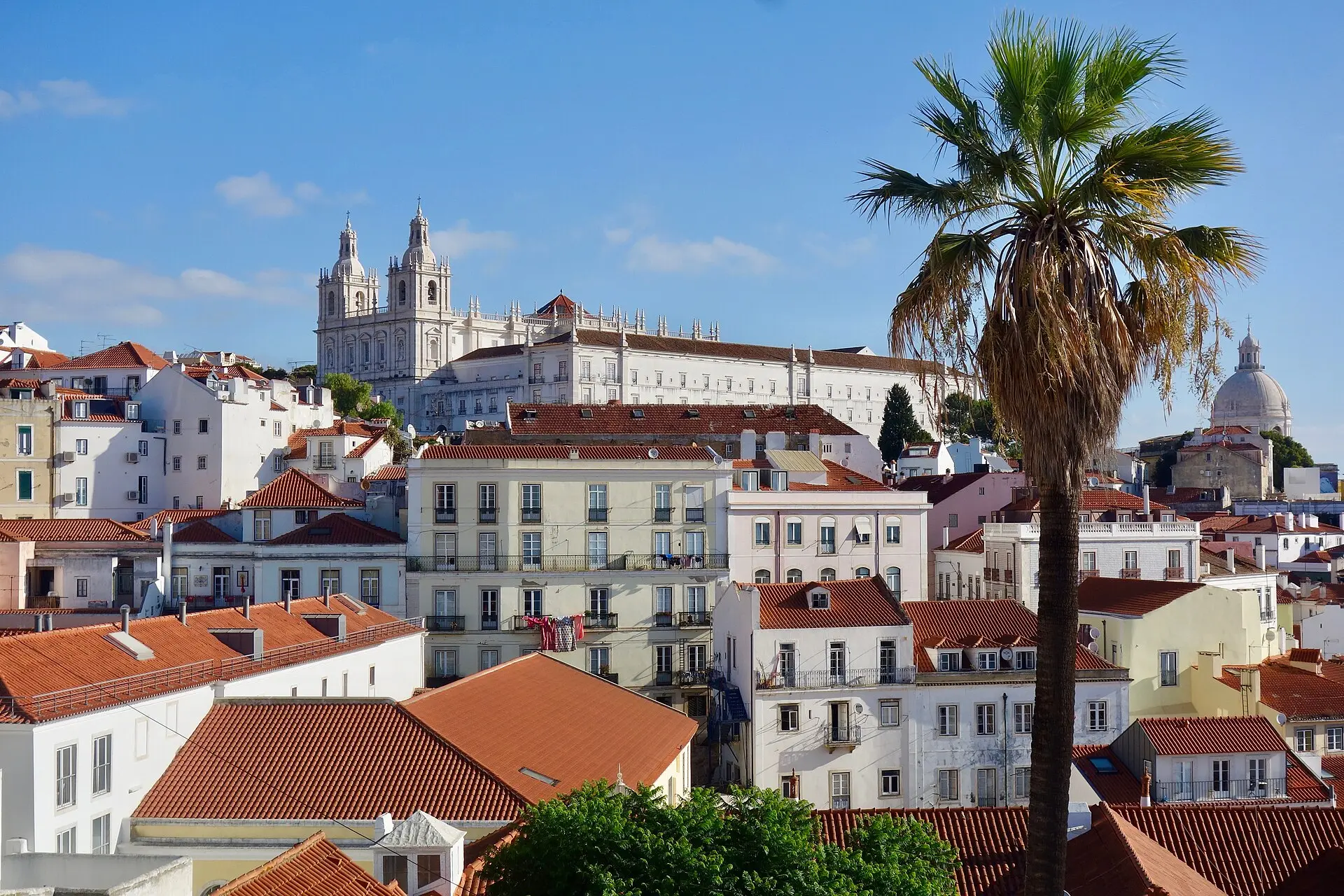
Lisbon is a city of hills on the Tagus: above, São Jorge Castle on the highest hill of the Old Town, below, the Baixa, whose street grid came into being after the earthquake of 1755. The city suits you if you want to explore neighbourhoods on foot, hear fado and see the buildings of the Age of Discovery in Belém. Slopes come with the territory, especially as several historic lifts are currently out of service (as of September 2026).
Advice from the German Federal Foreign Office
Because of several forest fires and unusually high temperatures, the wildfire alert level applies to the whole of mainland Portugal, according to the German Foreign Office, but not to Madeira and the Azores. This means bans on fire and smoke apply, campfires and fireworks are prohibited, and you may not enter certain wooded areas. Follow the instructions of the fire brigade and the authorities; the Fogos map shows current fire locations.
AI-generated summary of the German Federal Foreign Office’s travel and safety advice for Portugal, version of 29 July 2026. It simplifies and may be incomplete: before you travel, also read the Foreign Office’s original text (in German).
Original text from the German Federal Foreign Office (in German) (opens in a new tab)Getting there and from the airport into the city
According to Turismo de Lisboa, Lisbon Airport (LIS) is only about 7 km from the city centre. The drive is longer; the “At a glance” box shows the route and duration. Aeroporto metro station is in the arrivals area of Terminal 1 and is the terminus of the Red Line (Linha Vermelha).
The station is open from 06:30 to 01:00. Lifts connect platform, hall and street, and there are also escalators, which helps with a suitcase. The ticket counter is currently closed; tickets are available from machines and via Multibanco (as of September 2026).
The Red Line has 12 stations between Aeroporto and São Sebastião; along the way it stops at Oriente in Parque das Nações. You reach the Old Town with one change:
- Red Line towards São Sebastião to Alameda.
- There, change to the Green Line towards Cais do Sodré.
- Depending on your accommodation, get off at Martim Moniz, Rossio or Baixa-Chiado.
On weekdays the Red Line runs on average every 6 to 10 minutes, at weekends every 7 to 10 minutes (as of September 2026). According to Metro, Carris buses 705, 722, 744 and 783 also stop at the station. This guide does not state a taxi price: the new tariff regulation of the mobility authority AMT (Regulamento 717/2026) has been postponed and, according to the press, is due to come into force on 1 October 2026. There is also the tourist information point “Ask Me Lisboa” at the airport.
Tip
Get your ticket from the machine
The “navegante ocasional” card costs €0.50 and can be topped up for a year. You can load single journeys, 24-hour tickets or Zapping credit. The card is valid for one person only: if two of you are travelling, you need two cards, even if several tickets are loaded (as of September 2026).
Where to stay: the neighbourhoods compared
What matters is proximity to the metro and the gradient on the way to the sights. The Green Line connects Martim Moniz, Rossio and Baixa-Chiado directly with Cais do Sodré, the station for Belém and Cascais. If you prefer somewhere greener, look at Príncipe Real by the Jardim do Príncipe Real.
| Neighbourhood | Location and connections | Suits | Drawback |
|---|---|---|---|
| Alfama and Mouraria | lanes around the castle; tram 28E, Graça funicular | fado, viewpoints Portas do Sol and Cerca Moura | hillside location, narrow lanes |
| Baixa and Chiado | grid with Rossio and Praça da Figueira; Rossio and Baixa-Chiado metro | a first visit, arriving with a suitcase | one of the busiest areas of the city |
| Bairro Alto | upper town; tram 28E at Praça Luís de Camões | going out, vintage and alternative shops by day | nightlife district in the evening; Glória funicular is out of service |
| Belém | on the Tagus; tram 15, suburban train from Cais do Sodré | cycle path along the river, early start at the monuments | Jerónimos and Torre de Belém closed on Mondays |
| Parque das Nações | Expo site of 1998; Oriente metro | airport without a change, Oceanário, riverbank | change needed to get to the Old Town |
Swipe the table sideways to see all columns.
Tram 28, tram 15 and the lifts
Normally tram 28E runs from Martim Moniz to Prazeres, but at present only from Graça. From there it passes the viewpoints Portas do Sol and Santa Luzia to the Sé and goes through Chiado to Praça Luís de Camões. Then it continues via Calhariz (Bica) and the Basílica da Estrela to Campo de Ourique. A tram journey bought from the driver costs €3.30, with a loaded single journey €1.90 (as of January 2026).
Because of a closure of Rua Forno do Tijolo, Carris has been splitting the route since 31 August 2026; three weeks had been announced. A bus runs between Martim Moniz and Graça, the tram only between Graça and Prazeres, and at Largo da Graça you change without a new ticket. On 23 September Carris online still showed only the tram section Graça to Campo de Ourique (Prazeres). Check the current status before you travel on the Carris line page (opens in a new tab).
Tram 15 runs from Praça da Figueira along the Tagus to Belém. From 22 to 29 September 2026, after 21:00 it already ends in Belém because of a closure at Algés.
On 3 September 2025 a connecting cable failed on the Glória funicular, the cabin derailed and 16 people died. Afterwards all of the city's historic lifts were shut down as a precaution.
Caution
Lifts and funiculars (as of September 2026)
- Glória (Restauradores to Bairro Alto, since 1885): out of service; Carris plans a new build and names 2029 as the target.
- Lavra (the oldest, 1884) and Bica (1892): out of service, no fixed date.
- Elevador de Santa Justa (1902): temporarily closed; media cite January 2027, Carris does not confirm this.
- Graça (Mouraria to Graça): back in operation since 30 April 2026; after maintenance on 22 September, Carris announced it would resume on 23 September.
Sights by area
Castle and Alfama
Castelo de São Jorge stands on the highest of the Old Town hills; Portugal's first king captured it in 1147. Adults pay €17, 13- to 25-year-olds €8.50, and children up to 12 years are free. From March to October it is open from 09:00 to 21:00, from November to February from 09:00 to 18:00 (as of September 2026).
You can spare yourself the climb by taking bus 737 from Praça da Figueira to Chão da Feira, from where it is a 2-minute walk. From tram 28E at Miradouro de Santa Luzia it is about a 5-minute walk, from Rossio metro around 11 minutes. The castle also mentions a public lift at Rua dos Fanqueiros 176.
The neighbourhoods of Alfama and Mouraria stretch down the slope from the castle; fado has its origins in their narrow lanes. You look out over the rooftops from the viewpoints Cerca Moura and Portas do Sol, and tram 28E also stops at the latter.
Baixa and Chiado
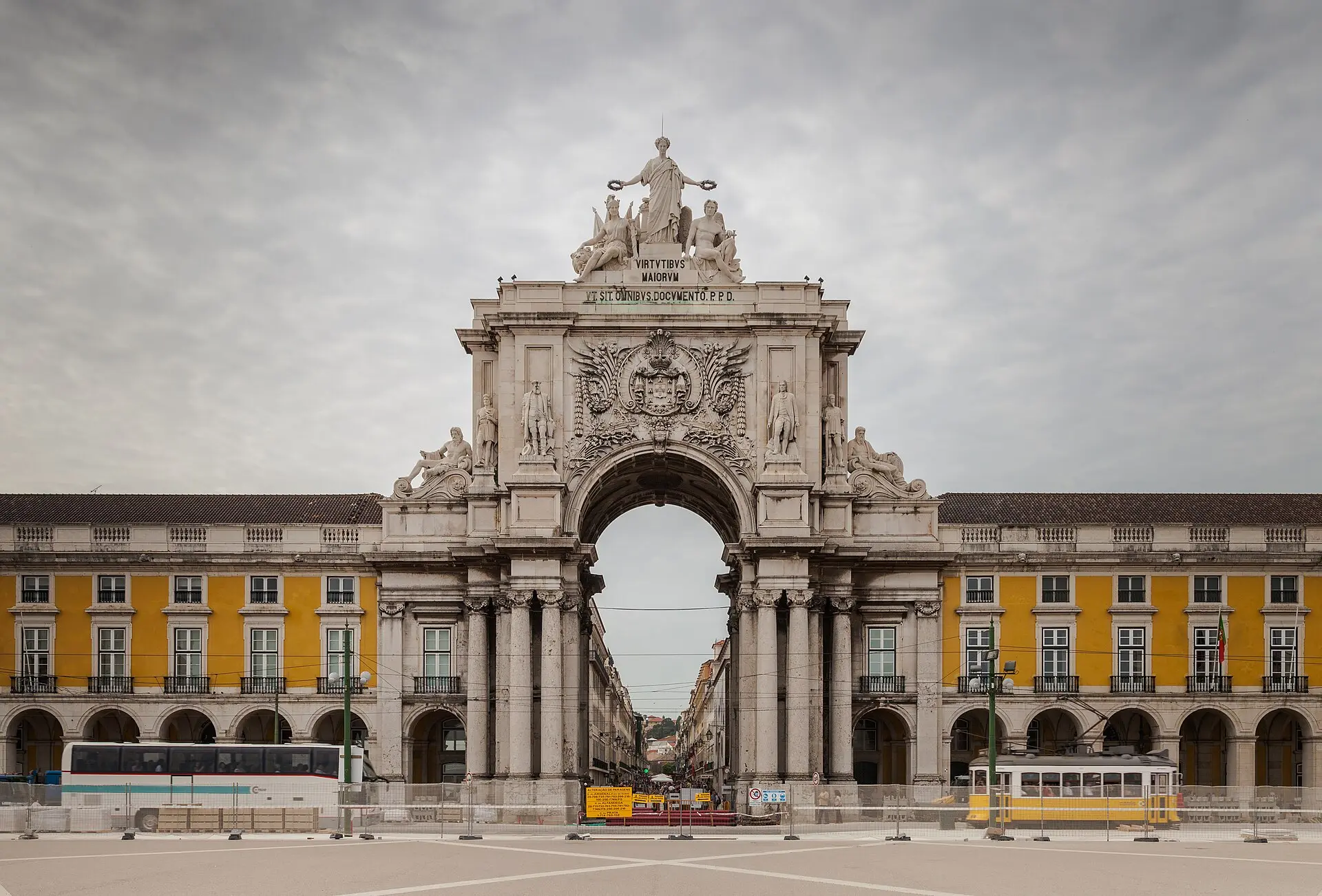
The Baixa was rebuilt on a grid after the earthquake of 1755 under the Marquês de Pombal. The street names go back to guilds, for example Rua do Ouro and Rua da Prata. On the river lies Praça do Comércio, also called Terreiro do Paço. It is the largest square in Lisbon, rebuilt after 1755; the royal residence used to stand here.
From Miradouro de Santa Catarina the view stretches over the harbour to the 25 de Abril Bridge and the Cristo Rei statue of Christ. Among the intellectuals who met in Chiado was Fernando Pessoa. The Museu do Chiado uses rooms of the former São Francisco convent.
Bairro Alto and Príncipe Real
Since the Glória funicular from Restauradores is out of service, you walk up into Bairro Alto or take tram 28E to Praça Luís de Camões. In the neighbourhood are the São Pedro de Alcântara viewpoint and the São Roque church. At night it is a nightlife district; by day vintage and alternative shops are open.
Near the Jardim do Príncipe Real are the Natural History Museum and the Botanical Garden. In the garden itself, completed in 1869, grows the so-called Buçaco cedar; botanically it is a cypress with a horizontally spreading crown.
Belém
Belém is the district of the voyages of discovery of the 15th and 16th centuries, with a cycle path and marinas on the Tagus. You get there by tram 15 or by the suburban train of the Cascais line, which stops in Belém 8 minutes after Cais do Sodré. Prices and times in the list are as of September 2026.
- Mosteiro dos Jerónimos: built under King Manuel I, UNESCO World Heritage Site since 1983. Cloister Tuesday to Sunday 09:30 to 17:30, €18.
- Torre de Belém: built from 1514 to 1519 by the architect Francisco de Arruda on a basalt rock in the river, in the Manueline style and also a World Heritage Site since 1983. Tuesday to Sunday 09:30 to 17:30, €15.
- Other sights: the Padrão dos Descobrimentos (rebuilt in stone in 1960, first version 1940), the Centro Cultural de Belém and the Coach Museum (€15).
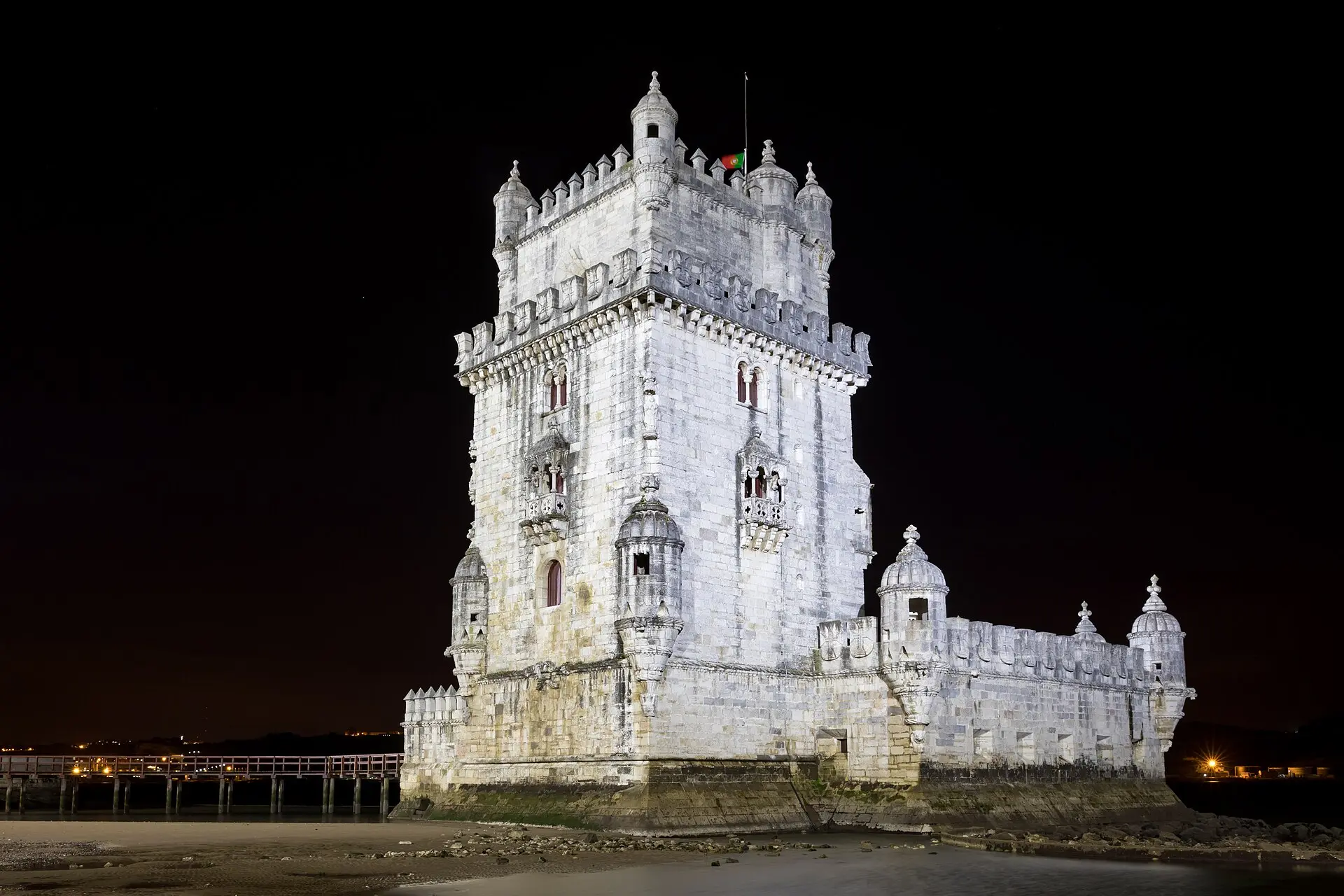
Because Belém is on the railway to Cascais, the two can be combined in one day. That does not work on Mondays, when Jerónimos and the Torre are closed.
Parque das Nações
On the site of Expo '98 stand Oriente station by Santiago Calatrava and the Portugal Pavilion by Álvaro Siza Vieira, plus a cable car, gardens and the riverbank. Because Oriente is on the Red Line, the neighbourhood suits your arrival or departure day.
The Oceanário at Doca dos Olivais is open daily from 10:00 to 20:00. Depending on the time slot, adults pay €29.90 in the morning down to €25.50 between 16:00 and 18:30; the visit takes about 1.5 to 2 hours (as of September 2026).
Day trips: Sintra and Cascais
Sintra
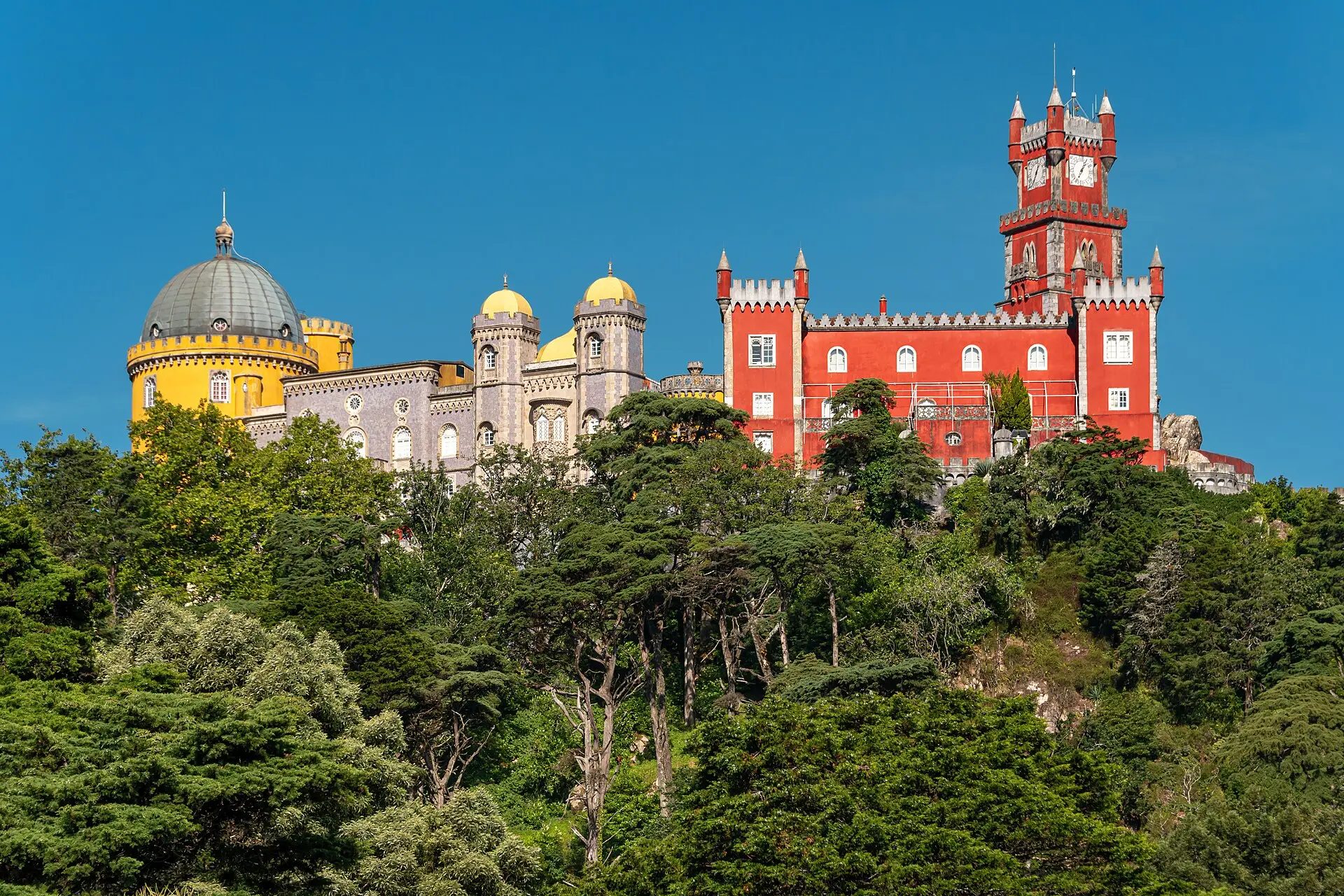
The Cultural Landscape of Sintra has been a UNESCO World Heritage Site since 1995, the first cultural landscape in Europe on the list. The CP suburban train from Rossio takes about 40 minutes for the 27.2 km. At weekends it runs every 30 minutes (timetable since 30 June 2024). For a day trip there is the 24-hour ticket for Carris, Metro and CP suburban trains at €11.40 (as of January 2026).
Pena Park is open from 09:00 to 19:00, the palace from 09:30 to 18:30. Adults pay €20 for the “Visita essencial”, €45 for the “Visita total” or €12 for the park only. Castelo dos Mouros costs €12, Palácio Nacional de Sintra €13 and Monserrate €12. At these three monuments the ticket offices close from 12:00 to 13:00, but there are ticket machines there all the same (as of September 2026).
Tip
Book Pena with a time slot
Pena tickets are valid for a chosen date and time. Online, the date is mandatory, and you can rebook yourself for up to a year (as of September 2026).
Cascais
The CP's Cascais line starts at Cais do Sodré; the train takes about 40 minutes and runs roughly every 20 minutes during the day (timetable since 6 April 2026). Cascais has 30 km of coast. From the town centre a coastal path leads to Boca do Inferno, where the surf has washed out an open rock arch. In the town there is also the Casa das Histórias Paula Rego museum.
Food, fado and festivals
The Pastel de Belém comes from Belém, a custard tart in puff pastry, also known as Pastel de nata. Convent desserts, the doces conventuais, also have a long tradition.
Fado mixes Afro-Brazilian dance songs with local and rural traditions and has been on UNESCO's intangible cultural heritage list since 2011. On the night of 12 to 13 June Lisbon celebrates Santo António. In the Marchas Populares parade the neighbourhoods line up in costume on Avenida da Liberdade. At the same time the districts hold their Arraiais, street parties with grilled sardines.
Best time to visit
The figures come from the weather service IPMA (Lisbon/Instituto Geofísico station, average 1991 to 2020). The annual mean is 17.6 °C, and there is on average not a single frost day.
For walks over the hills, spring and early autumn are best. The average daily maximum is 20.4 °C in April, 23.1 °C in May and 22.8 °C in October. September is warmer at 26.6 °C, but has on average only 3.8 rainy days; October, with 110.6 mm, is already considerably wetter.
In August the maximum reaches 28.8 °C on average, and on 10.2 days it reaches 30 °C or more. July is the driest month with 2.6 mm; the record is 43.3 °C on 4 August 2018.
In January the average highs are 15.1 °C and the lows 8.6 °C. The wettest month is November with 133.9 mm and 9.9 rainy days.
Costs
Eating out and accommodation are on average cheaper in Portugal than in Germany. Eurostat puts the price level for restaurants and hotels in 2024 at 75.5 (EU27 = 100), while Germany is at 112.1. Food and non-alcoholic drinks cost almost the same, 101.5 compared with 102.7. The figures apply to Portugal as a whole, not just Lisbon.
The city levies a tourist tax of €4 per person per night; in July 2024 it decided to double it from €2 as of 1 September 2024. Two adults therefore pay €24 for three nights.
The Lisboa Card costs adults €31 for 24 hours, €51 for 48 and €62 for 72 hours. It includes bus, tram, metro and trains as well as free admission, for example to the castle, Jerónimos and Torre de Belém. These three admissions alone cost €50; with two 24-hour tickets at €7.25 each you come to €64.50, which is more than the €51 of the 48-hour card. For Jerónimos and Torre de Belém you book a time slot with the card number; that is only possible once you have the card in your hand, and places are limited (as of September 2026).
Practical information
You pay in euros, the official language is Portuguese, and the emergency number is 112. The mains voltage is 230 V at 50 Hz, and the sockets follow the European standard.
| Ticket (as of January 2026) | Price |
|---|---|
| Single journey Carris/Metro, valid for 1 hour | €1.90 |
| Metro journey with Zapping credit | €1.72 |
| Metro contactless with bank card | €1.92 |
| 24 hours Carris/Metro | €7.25 |
| 24 hours including CP suburban trains | €11.40 |
| From the driver: bus / tram | €2.30 / €3.30 |
Two metro entries in a row are not possible with the single journey ticket. Lisbon Metro (opens in a new tab) calls its card “navegante ocasional” and does not use the name “Viva Viagem” on its website.
The current rules on entry, safety and health are on the German Foreign Office's website.
Entry requirements and safety
The rules that apply are published by the German Federal Foreign Office — always up to date there.
Travel and safety advice: Portugal (in German) (opens in a new tab)Who this is not for
- Anyone who finds walking difficult: Glória, Bica, Lavra and Santa Justa are currently not running; uphill you go on foot or by tram, bus and metro.
- Anyone who fears pickpockets: How the German Foreign Office assesses pickpocketing in Portugal and Lisbon is set out on its country page under “Safety”; the link is under “Practical information”.
- Anyone who avoids heat: In July there are on average 8.5 days with at least 30 °C, in August 10.2.
Sources and last update
- Metropolitano de Lisboa – Estação Aeroporto (opens in a new tab), accessed 23 September 2026
- Wikipedia: Lisbon Metro Red Line (opens in a new tab), accessed 23 September 2026
- Wikipedia: Lisbon Metro Green Line (opens in a new tab), accessed 23 September 2026
- Metropolitano de Lisboa – Horários e frequências (opens in a new tab), accessed 23 September 2026
- Visit Lisboa (Turismo de Lisboa) – Traveller information (opens in a new tab), accessed 23 September 2026
- Observador: Novas regras dos tarifários dos táxis adiadas (3 Aug 2026) (opens in a new tab), accessed 23 September 2026
- Diário da República – Regulamento n.º 717/2026 (opens in a new tab), accessed 23 September 2026
- Metropolitano de Lisboa – Tarifas 2026 (PDF) (opens in a new tab), accessed 23 September 2026
- Metropolitano de Lisboa – Cartão navegante ocasional (opens in a new tab), accessed 23 September 2026
- Carris – price table valid from 1 January 2026 (PDF) (opens in a new tab), accessed 23 September 2026
Show all 47 sources
- Carris – Carreira 28E (opens in a new tab), accessed 23 September 2026
- Carris – Carreira 28E (current line page Graça – Campo Ourique) (opens in a new tab), accessed 23 September 2026
- Carris – 12E, 28E Alteração de percurso (31 Aug 2026) (opens in a new tab), accessed 23 September 2026
- Carris – 15E Encurtamento Provisório (opens in a new tab), accessed 23 September 2026
- Carris – Funicular (Glória and Lavra) (opens in a new tab), accessed 23 September 2026
- Wikipedia: 2025 Ascensor da Glória derailment (opens in a new tab), accessed 23 September 2026
- Lisboa para Pessoas: Um ano depois da tragédia da Glória (1 Sep 2026) (opens in a new tab), accessed 23 September 2026
- Carris – Funicular da Graça: Encerramento temporário (opens in a new tab), accessed 23 September 2026
- Carris – Funiculars (Graça and Bica) (opens in a new tab), accessed 23 September 2026
- Visit Portugal – Discovering Lisbon (opens in a new tab), accessed 23 September 2026
- Visit Portugal – 10 things to do and see in Lisbon (opens in a new tab), accessed 23 September 2026
- Wikipedia (pt): Castelo de São Jorge (opens in a new tab), accessed 23 September 2026
- Visit Lisboa – The Century-Old tree of Príncipe Real (opens in a new tab), accessed 23 September 2026
- Castelo de São Jorge – Choose your ticket (opens in a new tab), accessed 23 September 2026
- Castelo de São Jorge – Schedules (opens in a new tab), accessed 23 September 2026
- Castelo de São Jorge – How to arrive (opens in a new tab), accessed 23 September 2026
- Visit Lisboa – Belém (opens in a new tab), accessed 23 September 2026
- Museus e Monumentos de Portugal – Mosteiro dos Jerónimos (opens in a new tab), accessed 23 September 2026
- Museus e Monumentos de Portugal – Torre de Belém (opens in a new tab), accessed 23 September 2026
- Museus e Monumentos de Portugal – Bilhetes (opens in a new tab), accessed 23 September 2026
- Padrão dos Descobrimentos – Monument to the Discoveries (opens in a new tab), accessed 23 September 2026
- Oceanário de Lisboa – Opening hours and prices (opens in a new tab), accessed 23 September 2026
- Visit Lisboa Shop – Lisboa Card (opens in a new tab), accessed 23 September 2026
- Comissão Nacional da UNESCO – Fado (opens in a new tab), accessed 23 September 2026
- Visit Lisboa – St. Anthony's Night 12–13 June (opens in a new tab), accessed 23 September 2026
- IPMA – Normal Climatológica Lisboa/Instituto Geofísico 1991–2020 (opens in a new tab), accessed 23 September 2026
- ECO: Câmara de Lisboa aprova aumento da taxa turística (19 Jul 2024) (opens in a new tab), accessed 23 September 2026
- Eurostat – Price level indices (prc_ppp_ind) (opens in a new tab), accessed 23 September 2026
- CP – Horário Comboios Urbanos Lisboa ↔ Sintra/Azambuja (PDF) (opens in a new tab), accessed 23 September 2026
- CP – The Sintra Line (opens in a new tab), accessed 23 September 2026
- Parques de Sintra – Paisagem Cultural de Sintra, Património UNESCO (opens in a new tab), accessed 23 September 2026
- Parques de Sintra – Horários e Preços (opens in a new tab), accessed 23 September 2026
- CP – Horário Linha de Cascais, em vigor desde 6 de abril 2026 (PDF) (opens in a new tab), accessed 23 September 2026
- Visit Cascais – Visitor information (opens in a new tab), accessed 23 September 2026
- Visit Cascais – Boca do Inferno (opens in a new tab), accessed 23 September 2026
- German Foreign Office – Portugal: travel and safety advice (in German) (opens in a new tab), accessed 23 September 2026
- Visit Lisboa – Ask Me Lisboa Aeroporto de Lisboa (opens in a new tab), accessed 23 September 2026
Information last checked on 28 September 2026.
Last change to the content on 28 September 2026: Added a box with the German Foreign Office's travel and safety advice.
Found a mistake? Write to us — we’ll correct it and note it here.