Research guide · Tenerife
Tenerife in winter: climate north and south, regions, Teide, getting there
Where Tenerife is warm and dry from December to March, which region suits you, how to get up Teide and how the buses run from TFS airport.
By Nighthopper editorial teamCreated with AITranslated with AIPublished Updated 12 min read
How this article was made
This English version was translated from the German original with AI and has not been reviewed by a person. The checks described here refer to the German original, which is authoritative.
Text created with AI and checked with AI against the sources listed. Approved by Simon Misiak on .
Editorially responsible: Saimon Misiaki (Simon Misiak).
At a glance
- South in January: avg. 21.7 °C by day and 1.8 rainy days (AEMET, Tenerife Sur station, 1981 to 2010)
- North cooler and wetter: Tenerife Norte station (632 m) in January avg. 16.0 °C and 7.7 rainy days
- For the south: TFS airport, Aeroexpress 40 to Los Cristianos and Costa Adeje in about 40 minutes
- Sea from December to March around 19 to 22 °C (Puertos del Estado buoys, winter up to March 2026)
- Teide summit only with a permit, non-residents pay €15 (as of January 2026)
- Pay on the bus in cash (maximum €10) or by card; tourist card 7 days €50 (as of September 2026)
Getting there from Germany
Airport: Tenerife South (TFS)
| From | As the crow flies | Compensation up to |
|---|---|---|
| Frankfurt (FRA) | 3,238 km | €400 |
| Munich (MUC) | 3,318 km | €400 |
| Berlin (BER) | 3,669 km | €400 |
| Düsseldorf (DUS) | 3,237 km | €400 |
| Hamburg (HAM) | 3,574 km | €400 |
Compensation per person under the EU air passenger rights regulation (Regulation (EC) No 261/2004) if the flight arrives 3 hours late or more, or is cancelled less than 14 days before departure — not in extraordinary circumstances such as severe weather. Check whether you’re owed anything →
- Time difference:
- −1 hour
- From the airport to Costa Adeje:
- approx. 24 km, around 30 min by car
Straight-line distance: our own calculation from airport data (OurAirports). Driving time: guide figure from a transfer provider.
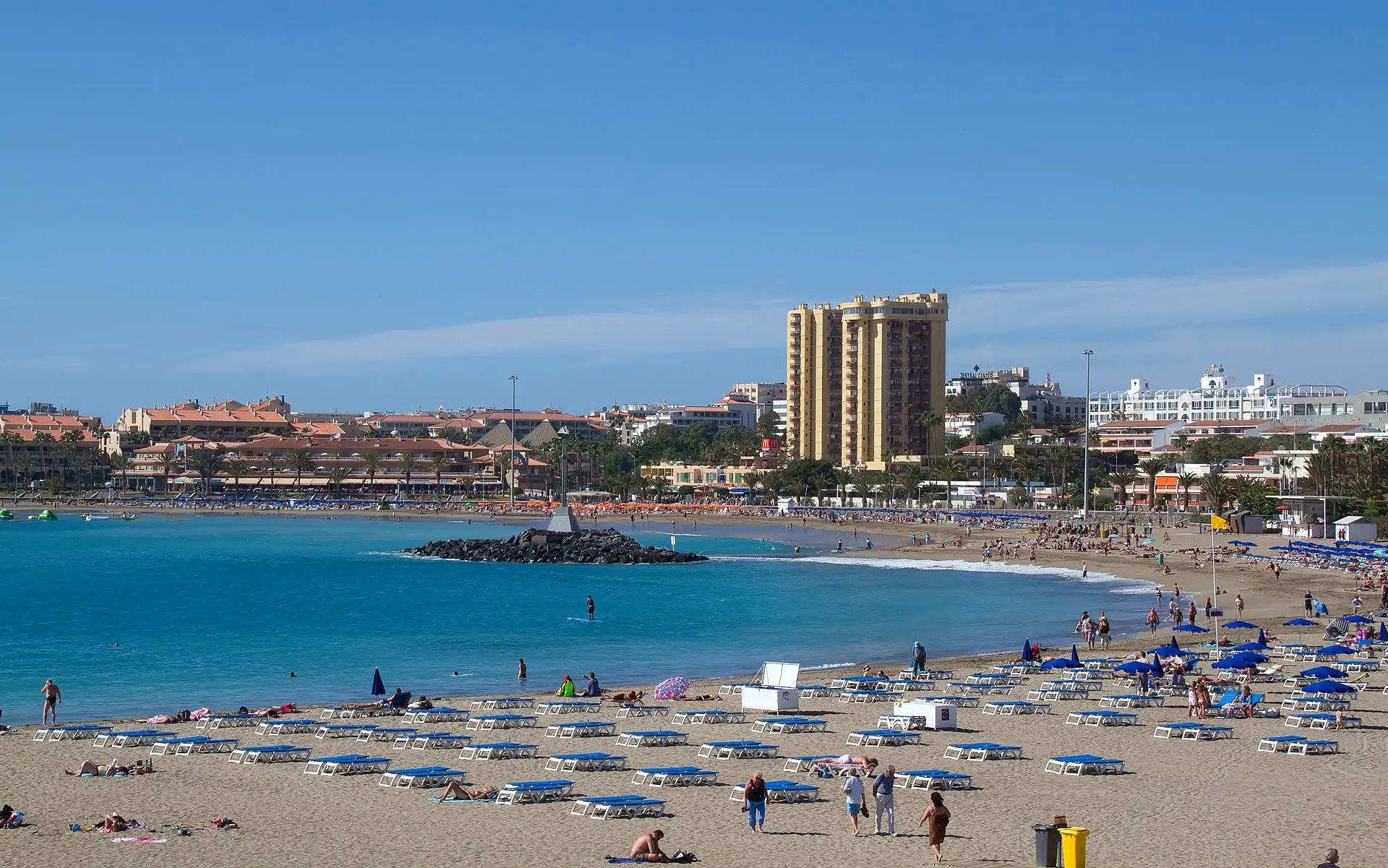
In winter on Tenerife, the compass direction decides the weather. If you are looking for sun and beach from December to March, you stay in the south at Costa Adeje or in Los Cristianos. If you want old towns, laurel forest and hiking trails, you accept cooler and wetter days in the north around La Laguna, Puerto de la Cruz and Anaga.
Advice from the German Federal Foreign Office
The German Federal Foreign Office changed its travel and safety advice for Spain on 12 October 2026. The current version is on its website.
Original text from the German Federal Foreign Office (in German) (opens in a new tab)The difference is shown by the January figures of the Spanish weather service AEMET. At Tenerife Sur airport the average is 21.7 °C by day and 1.8 rainy days. At the Tenerife Norte station at an altitude of 632 m it records 16.0 °C and 7.7 rainy days.
Between the two sides lies Teide, at a good 3,700 m the highest point in Spain. You can only reach the summit with a permit, and in winter also with equipment against snow and ice.
Getting there and from the airport into town
Tenerife has two airports; the journey between them is 65.5 km long and takes about an hour by car. For the south, Tenerife South (TFS, also “Reina Sofía”) is the obvious arrival point, since it lies in Granadilla de Abona in the middle of the holiday area. According to Aena, more than half of its traffic comes from Great Britain and Germany (as of September 2026).
Tenerife North (TFN, “Ciudad de La Laguna”) is in La Laguna, about 10 km from Santa Cruz and about 20 km from Puerto de la Cruz. Domestic flights predominate here, above all to Madrid and the neighbouring islands. No German airline appears on Aena's list of airlines for TFN (as of September 2026).
Flight delayed or cancelled?Check whether you’re owed money under the EU air passenger rights regulation — with every step of the check in plain language.From the south airport TFS by bus
The buses stop in the terminal on level 0 in the arrivals area. From there these TITSA lines run (as of September 2026); the transfer time to Costa Adeje is in the “At a glance” box.
- Line 40 (Aeroexpress) via Los Cristianos to Estación Costa Adeje, about 40 minutes, from the airport daily from about 06:30 to 21:40. Towards Costa Adeje the buses only stop to let passengers off along the way.
- Line 10 (Aeroexpress) to the Intercambiador bus station in Santa Cruz, about 55 minutes, first departure from the airport 06:10 (weekdays only, otherwise 06:35), last 22:05.
- Line 343 (Express) from Costa Adeje and Los Cristianos via both airports to Puerto de la Cruz; between TFS and TFN non-stop in about 50 minutes.
From the north airport TFN by bus
Here the buses leave from level -1 at the bus park. Line 20 takes you to La Laguna and Santa Cruz (€2.65 each), line 30 to Puerto de la Cruz (€4.75), and at night line 104 runs (as of September 2026). If you are staying in the south, take line 343.
Tip
On the bus: card or cash
On the bus you pay by bank card or cash. Give the driver no more than €10; at night from 21:00 to 05:30 only the exact amount (as of September 2026). If you travel a lot, buy the tourist card straight away at the machine in the airport.
Hire car: worthwhile if you combine north and south
The tourism office calls the hire car the most convenient solution for poorly connected places, beaches and natural areas and for anyone combining north and south. The main axes are the TF-1 motorway in the south and the TF-5 in the north, whereas the mountain roads are narrow and winding. Between Santa Cruz and the south the bus is enough, for example lines 110 and 111 to Costa Adeje (as of September 2026).
Car hire Tenerife: Tenerife South Airport (TFS)Latest price sample for each car class and rental company, plus the search for your travel dates.Where to stay: the areas compared
In winter, choosing an area is first of all a question of weather. Over the year, according to AEMET, 132 mm of rain falls at the south airport and 520 mm at the north airport, so the north is about four times as wet.
| Area | Location and connections | Suits | Drawback |
|---|---|---|---|
| Costa Adeje and Los Cristianos | south; line 40 from TFS about 40 min.; in Los Cristianos a 345 m town beach with light sand | beach holidays, boat trips to see whales and dolphins, ships to other islands | the north is far away: 65.5 km by road between the airports alone |
| Puerto de la Cruz | north coast in the Orotava Valley; lines 30 and 343 from TFN | seawater swimming complex, Botanical Garden, Teide bus 348 | north side in the trade wind: damper, less sun |
| La Laguna | World Heritage Old Town, TFN lies in the municipality; tram to Santa Cruz | Old Town, buses into the Anaga mountains | Tenerife Norte station: January 16.0 °C, 7.7 rainy days |
| Santa Cruz | island capital on the east coast; line 10 from TFS, line 20 from TFN | city, carnival, bus hub for Anaga and the south | December 5.4 rainy days instead of 3.5 as in the south |
Swipe the table sideways to see all columns.
Further holiday resorts in the south are Playa de las Américas, Costa del Silencio and Los Gigantes; El Médano near the south airport is known for windsurfing and kitesurfing.
Sights in winter: Teide, La Laguna, Anaga and the coast
Teide: cable car, summit permit and winter weather
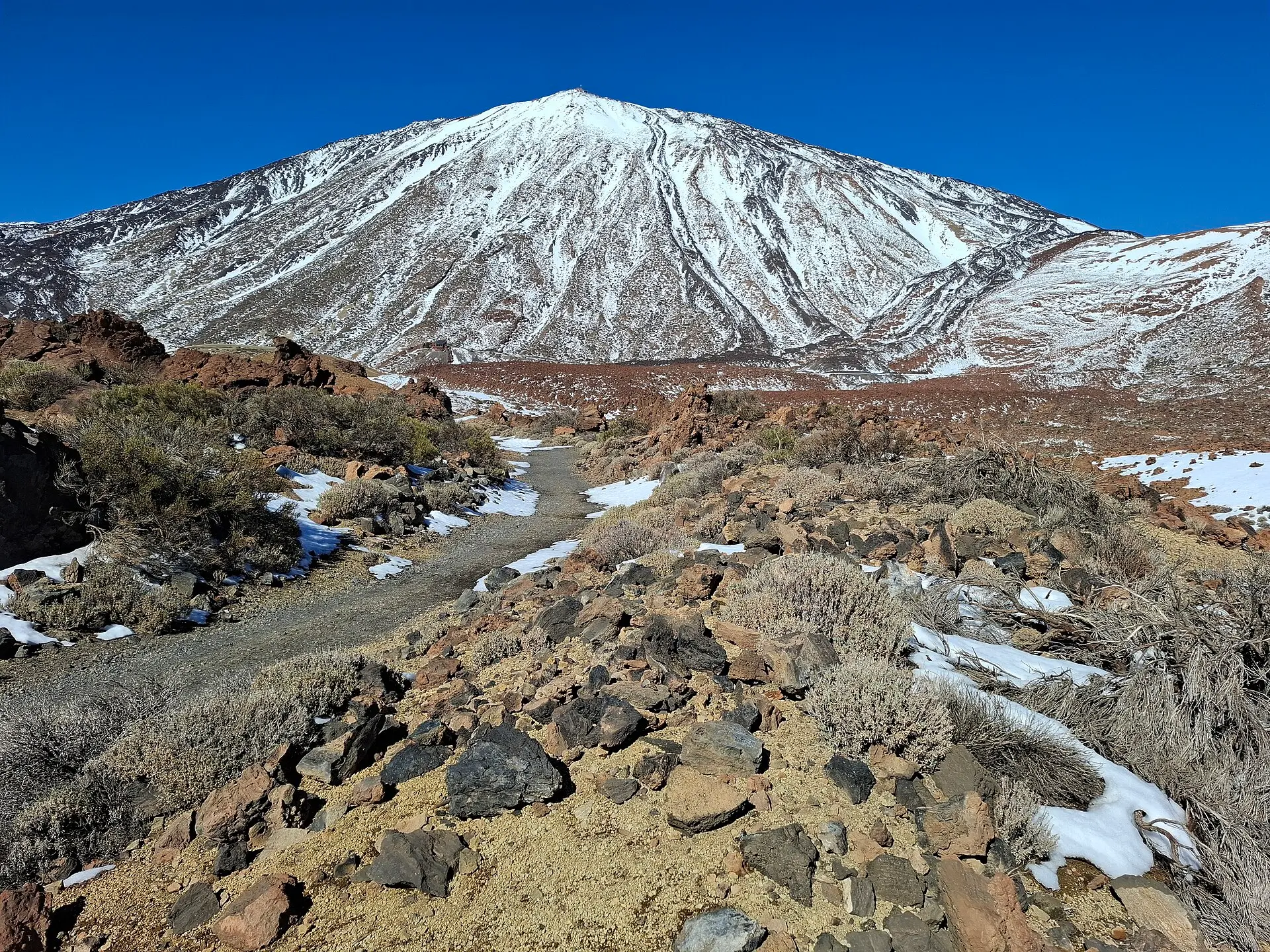
According to the Ministry of Culture, Teide is 3,718 m high (the summit path page gives 3,715 m) and, measured from its base, the third-largest volcano in the world. The national park has been a UNESCO natural World Heritage Site since 2007.
The cable car runs from the lower station at 2,356 m in about 8 minutes to the upper station La Rambleta at 3,555 m. In the winter timetable (25 October to 27 March) it runs daily from 09:00 to 17:00, and the last ascent is at 16:00 (as of September 2026). The car park at the lower station is free.
From La Rambleta, path No. 10 “Telesforo Bravo” leads over 0.69 km and up to 60 % gradient in about 45 minutes to the summit. For this you need a permit, which you book after registering on the Tenerife ON platform, at most 56 days in advance. New weekly quotas are released every Monday at 07:00 Canary time (as of September 2026).
Since 19 January 2026, non-residents pay €15 for the permit, and children under 14 nothing. On the day of the ascent you need it printed or on your phone, plus your ID card or passport. The rules are given by Teide National Park (opens in a new tab).
Caution
Permit is only valid at the booked time
The summit permit is only valid for the booked day and time, but cable car operation is not guaranteed. The cable car only runs in suitable weather; the operator reports the status daily on its page “Teide hoy”. In winter you need equipment against snow and ice at the top, and above 3,550 m you walk slowly and with many breaks.
Pack warm clothing, even if it is a good 21 °C by day in the south. The AEMET station Izaña at 2,369 m, almost at the height of the lower station, records an average of 7.5 °C by day and 1.1 °C at night in January, plus 12.3 frost days. At the same time it gets 226 hours of sunshine in January, more than any station on the coast.
Without a car, line 342 runs from the south once a day at 09:25 from Estación Costa Adeje, at 09:40 from Los Cristianos. It takes about 2 hours 15 minutes and leaves the cable car for the return at 15:40. From the north, line 348 starts at 09:30 in Puerto de la Cruz, and the return leaves the cable car at 16:05 (as of September 2026).
La Laguna: World Heritage Old Town with two cores
The Old Town of San Cristóbal de La Laguna has been a UNESCO World Heritage Site since 1999. It is regarded as the first unfortified Spanish colonial city, and its layout became the model for colonial cities in the Americas. Villa de Arriba grew unplanned from 1497 around the church of La Concepción, while Villa de Abajo was laid out according to plan from 1502.
Tram line 1 runs from Santa Cruz to Trinidad in La Laguna. In the winter half-year it runs every 5 minutes on weekdays from 07:00 to 15:00, and the fare is €1.35 with a ten+ card (as of September 2026).
Anaga: laurel forest in the north-east
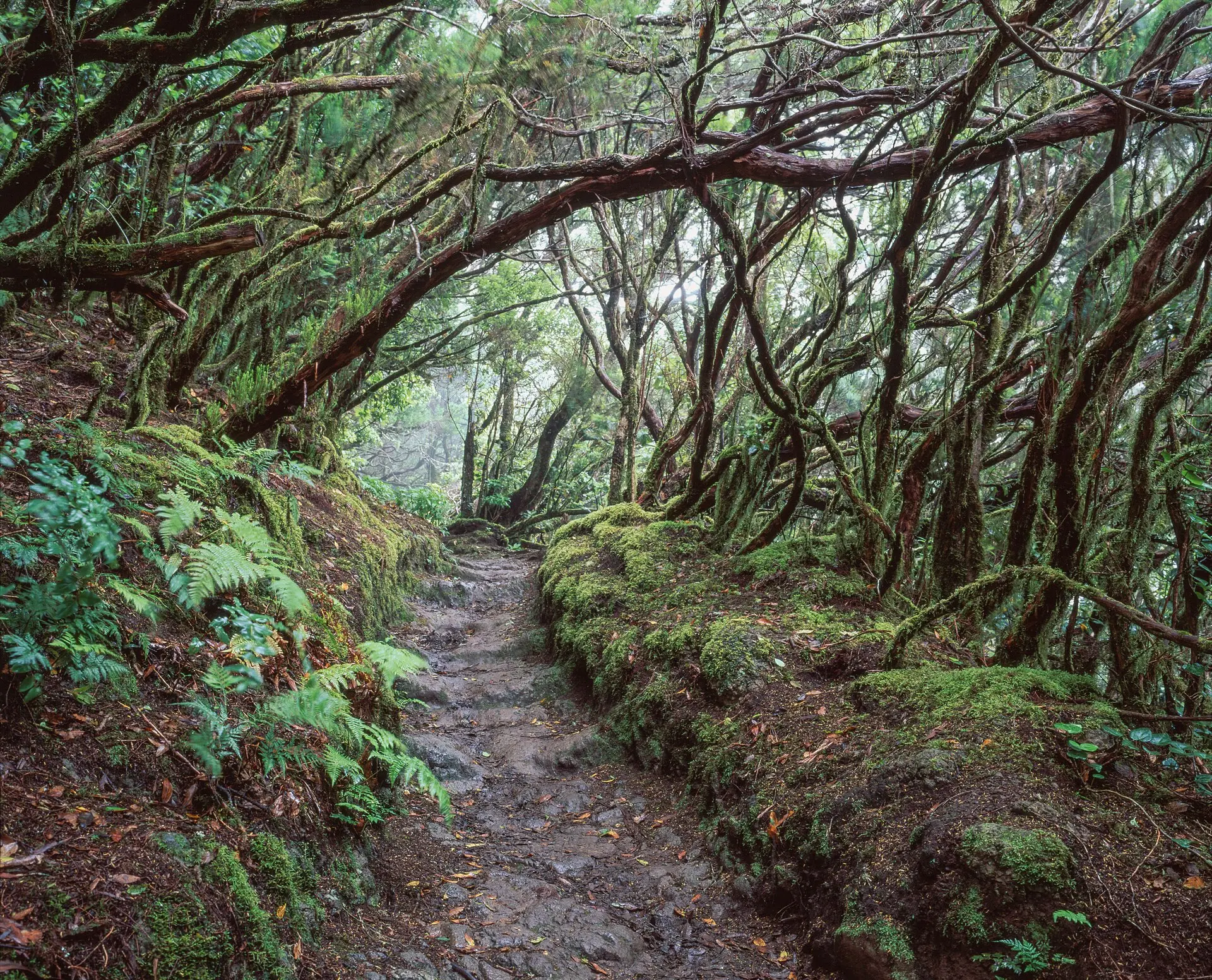
The Anaga mountains have been a UNESCO Biosphere Reserve since 2015. Anaga Rural Park (Parque Rural de Anaga), at just under 14,500 ha, protects laurel forest (Laurisilva), deep gorges and rock needles, which are called “roques” here.
The starting point is the Cruz del Carmen visitor centre, open daily from 09:30 to 16:00 (as of September 2026); easy paths begin at the viewpoint next to it. You get there from La Laguna by bus 076, at weekends and on public holidays also by bus 273. From Santa Cruz the 946 runs via Taganana to Almáciga (as of September 2026). The weather changes quickly there; rain protection and sturdy shoes belong in your rucksack.
Puerto de la Cruz: the first holiday resort in the Canary Islands
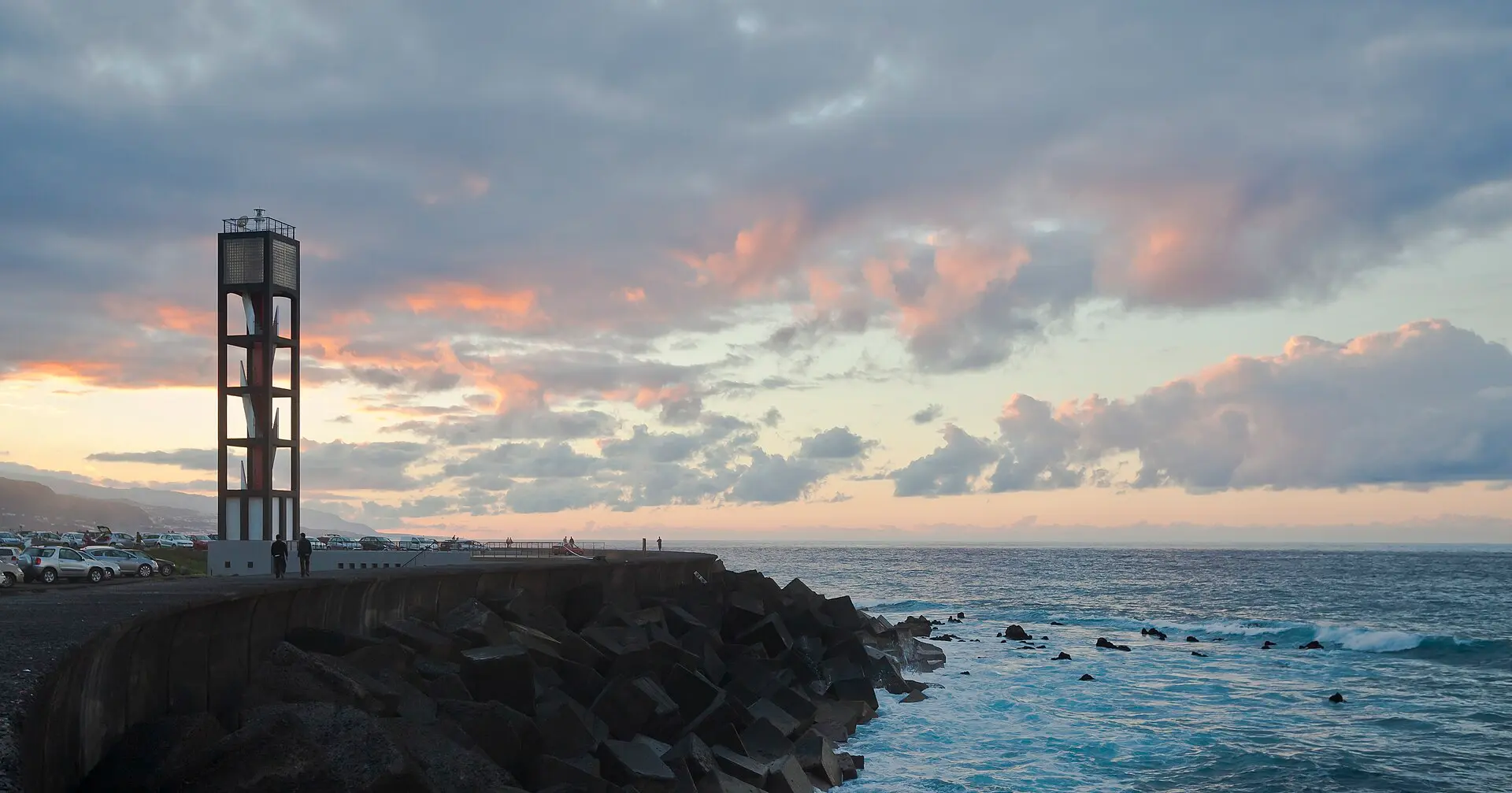
Puerto de la Cruz in the Orotava Valley has welcomed holidaymakers since the 19th century. Besides the mostly black sand beaches there is the Lago Martiánez, a seawater swimming complex designed by César Manrique with an artificial lake of 27,000 m³ of water. The Botanical Garden goes back to a royal decree by Charles III from 1788.
The south: whales and the Masca Gorge
Several groups of whales and dolphins live off Costa Adeje, which you can watch on boat trips. You can only enter the Masca Gorge with a reservation, from €40.66 for adults who are not residents; children under 8 are not admitted (as of September 2026). Since December 2025, only the compulsory TITSA 355 shuttle from Santiago del Teide runs there; you book the return trip by boat separately.
Santa Cruz: carnival 2027
The carnival in Santa Cruz falls two weeks later than usual in 2027. The street carnival runs from 19 to 28 February, and the big parade, Coso Apoteosis, is on Tuesday, 23 February (as of June 2026).
Best time to visit: the winter climate in figures
From December to March the south is warmer and drier than the north. The AEMET normals for 1981 to 2010 show the difference in January:
| Station (altitude) | Avg. maximum | Avg. minimum | Precipitation | Rainy days | Hours of sunshine |
|---|---|---|---|---|---|
| Tenerife Sur, south airport (64 m) | 21.7 °C | 15.2 °C | 17 mm | 1.8 | 193 |
| Santa Cruz, east coast (36 m) | 21.0 °C | 15.4 °C | 32 mm | 4.2 | 178 |
| Tenerife Norte, La Laguna (632 m) | 16.0 °C | 10.2 °C | 80 mm | 7.7 | 150 |
Swipe the table sideways to see all columns.
In December, Tenerife Sur gets 22.8 °C by day and 3.5 rainy days, Tenerife Norte 17.1 °C and 8.8 rainy days. In February the south has 22.0 °C and 2.2 rainy days, and in March already 23.1 °C with 226 hours of sunshine.
The tourism office gives the reason: the north side faces the trade wind and is therefore damper and greener, the south drier and sunnier. The trade wind pushes clouds against the northern slopes, usually between 500 and 1,500 m; from the Teide area this sea of clouds (“mar de nubes”) lies beneath you. The Tenerife Norte station is at 632 m and represents the plateau; there are no official normals for the beach at Puerto de la Cruz.
Sea: around 19 to 22 °C
There are no official climate averages for the water. For this text, the hourly readings of two Puertos del Estado buoys off Santa Cruz and off the south coast were evaluated. From December to March the monthly means of the last winters were around 19 to 22 °C, lowest in March. In August and September 2025 they were around 24 °C, so the winter water is 2 to 5 degrees cooler, least so in December (as of: measurement data up to March 2026).
Costs
The sources consulted give no amounts for hire cars, taxis and accommodation, which is why they are missing here. A Teide day with cable car and summit path costs adults who are not residents from €57 (€42 plus €15, as of September 2026).
| Item | Price | As of |
|---|---|---|
| Bus 343, Los Cristianos ↔ TFS | €3.70 | September 2026 |
| Bus 343, TFS ↔ TFN | €9.70 | September 2026 |
| Bus 343, Puerto de la Cruz ↔ TFS | €13.55 | September 2026 |
| Tourist card 1 day / 7 days, plus carrier card €2 | €10 / €50 | September 2026 |
| Cable car return trip, adults / children 3 to 13 | from €42 / €21 | September 2026 |
| Summit path No. 10, non-residents | €15 | January 2026 |
Swipe the table sideways to see all columns.
Practical information
You pay in euros; shops and restaurants do not usually accept other currencies. The Canary Islands are one hour behind Germany, the electricity is 220 V, and the plugs have two round pins as in the rest of continental Europe.
On the Canary Islands the bus is called “guagua”. For individual journeys, the ticket you buy on the bus with a bank card or cash is enough. For frequent journeys there is the stored-value card “Título Monedero”: you load €2 to €100 onto a ten+ card, and fares are charged by kilometre tariff (as of September 2026).
With the tourist card on a ten+ card or in the ten+ móvil app you can travel without limit. It is valid for 24 hours from first use or for 7 days on all TITSA buses and the tram, but only for you personally (as of September 2026).
The current rules on entry, safety and health are available from the German Foreign Office.
Entry requirements and safety
The rules that apply are published by the German Federal Foreign Office — always up to date there.
Travel and safety advice: Spain (in German) (opens in a new tab)Who this is not for
- Anyone who expects sea water like in summer: In winter the buoys measure around 19 to 22 °C.
- Anyone who wants to stay in the north and have plenty of sun: Tenerife Norte records 137 hours of sunshine in December, Tenerife Sur 195.
- Anyone who wants to climb the Teide summit spontaneously: Permits are issued in weekly quotas, and the cable car only runs in suitable weather.
- Anyone who wants to reach remote places without a car: According to the tourism office, buses run less often in the countryside and at certain times of day. Lines 342 and 348 run to Teide only once a day.
- Families with children under 8 who want to go into the Masca Gorge: The route is not open to them.
Sources and last update
- AEMET: Valores climatológicos normales, Tenerife Sur Aeropuerto (opens in a new tab), accessed 23 September 2026
- AEMET: Valores climatológicos normales, Tenerife Norte Aeropuerto (opens in a new tab), accessed 23 September 2026
- AEMET: Valores climatológicos normales, Santa Cruz de Tenerife (opens in a new tab), accessed 23 September 2026
- AEMET: Valores climatológicos normales, Izaña (opens in a new tab), accessed 23 September 2026
- Turismo de Tenerife: North-south contrast (Climatology) (opens in a new tab), accessed 23 September 2026
- Turismo de Tenerife: Blanket of cloud (Climatology) (opens in a new tab), accessed 23 September 2026
- Puertos del Estado (Portus): Temperatura del agua, Boya de Santa Cruz de Tenerife (opens in a new tab), accessed 23 September 2026
- Puertos del Estado (Portus): Temperatura del agua, Boya de Tenerife Sur (opens in a new tab), accessed 23 September 2026
- Aena: Business data on Tenerife Sur Airport (opens in a new tab), accessed 23 September 2026
- Aena: Business data on Tenerife Norte Airport (opens in a new tab), accessed 23 September 2026
Show all 43 sources
- Aena: Airlines, Tenerife Norte Airport (opens in a new tab), accessed 23 September 2026
- Turismo de Tenerife: Getting around Tenerife (opens in a new tab), accessed 23 September 2026
- Aena: Bus, Tenerife Norte Airport (opens in a new tab), accessed 23 September 2026
- Aena: Cómo llegar en autobús, Aeropuerto de Tenerife Sur (opens in a new tab), accessed 23 September 2026
- TITSA: Línea 10 (opens in a new tab), accessed 23 September 2026
- TITSA: Línea 40 (opens in a new tab), accessed 23 September 2026
- TITSA: Línea 342 and line directory (Líneas y horarios) (opens in a new tab), accessed 23 September 2026
- TITSA: Línea 348 (opens in a new tab), accessed 23 September 2026
- TITSA: Línea 076 (opens in a new tab), accessed 23 September 2026
- TITSA: Billetes y títulos de pago (opens in a new tab), accessed 23 September 2026
- TITSA: Fares and discounts (opens in a new tab), accessed 23 September 2026
- TITSA: Preguntas frecuentes (opens in a new tab), accessed 23 September 2026
- Metrotenerife: Routes and Timetables (opens in a new tab), accessed 23 September 2026
- Metrotenerife: Tickets and fares (opens in a new tab), accessed 23 September 2026
- Ministerio de Cultura: Parque Nacional del Teide (Patrimonio Mundial) (opens in a new tab), accessed 23 September 2026
- Parque Nacional del Teide: Sendero PNT 10 Telesforo Bravo (opens in a new tab), accessed 23 September 2026
- Parque Nacional del Teide: Trámites – Reservas (opens in a new tab), accessed 23 September 2026
- Cabildo de Tenerife (Tenerife + Sostenible): El Cabildo implanta la ecotasa del Teide (opens in a new tab), accessed 23 September 2026
- Volcano Teide (operator): Teleférico del Teide (opens in a new tab), accessed 23 September 2026
- Volcano Teide: Teleférico del Teide – Tarifas y horarios (opens in a new tab), accessed 23 September 2026
- Ayuntamiento de La Laguna: Declaración de Patrimonio de la Humanidad (opens in a new tab), accessed 23 September 2026
- MITECO: Reserva de la Biosfera Macizo de Anaga (opens in a new tab), accessed 23 September 2026
- Turismo de Tenerife: Anaga Rural Park (opens in a new tab), accessed 23 September 2026
- Turismo de Tenerife: The North (Tourist Areas) (opens in a new tab), accessed 23 September 2026
- Turismo de Tenerife: Puerto de la Cruz (opens in a new tab), accessed 23 September 2026
- Turismo de Tenerife: Lago Martiánez (Complejo Costa Martiánez) (opens in a new tab), accessed 23 September 2026
- Turismo de Tenerife: Tenerife South (Tourist Areas) (opens in a new tab), accessed 23 September 2026
- Turismo de Tenerife: Los Cristianos Beach (opens in a new tab), accessed 23 September 2026
- Camino del Barranco de Masca: Book your visit to the Masca trail (opens in a new tab), accessed 23 September 2026
- Ayuntamiento de Santa Cruz: Programa oficial del Carnaval 2027 (opens in a new tab), accessed 23 September 2026
- Turismo de Tenerife: Time (opens in a new tab), accessed 23 September 2026
- Turismo de Tenerife: Plugs and sockets (opens in a new tab), accessed 23 September 2026
- Turismo de Tenerife: Currency (opens in a new tab), accessed 23 September 2026
Information last checked on 28 September 2026.
Last change to the content on 28 September 2026: Added a box with the German Foreign Office's travel and safety advice.
Found a mistake? Write to us — we’ll correct it and note it here.