Research guide · Cyprus
Cyprus: Paphos, Troodos, Nicosia, Ayia Napa, best time to visit, getting there and costs 2026
Planning Cyprus: buses from Larnaca and Paphos, new bus fares since August 2026, seven regions with excavations and fees, climate, driving on the left, costs.
By Nighthopper editorial teamCreated with AITranslated with AIPublished 12 min read
How this article was made
This English version was translated from the German original with AI and has not been reviewed by a person. The checks described here refer to the German original, which is authoritative.
Text created with AI and checked with AI against the sources listed. Approved by Simon Misiak on .
Editorially responsible: Saimon Misiaki (Simon Misiak).
At a glance
- Passengers from Germany in 2025: 447,324, ranking 43rd of 211 destination countries abroad; 332,168 of them flew to Larnaca, 94,010 to Paphos (our own analysis, Destatis).
- Larnaca airport: city bus 425 from 6:30 to 23:50 every 20 minutes, €2.70 in cash, €2.00 with a plastic card (timetable as of September 2026, fare since 3 August 2026).
- No railway: the intercity bus Nicosia–Paphos takes about 2 hours and costs €8 (fare since 1 April 2025); the network pass for all cities costs €20 a day (since 3 August 2026).
- Driving on the left, at most 100 km/h on motorways, 0.5 per mille; a hire car is insured only in the area under the control of the Republic (as of September 2026).
- Three UNESCO World Heritage Sites: Paphos (1980), painted churches in the Troodos (1985, 2001), Choirokoitia (1998); Nea Pafos and Kourion cost €4.50 admission each (as of September 2026).
- Climate in Nicosia: in July and August a mean daily maximum of 37.5 °C; from June to September only 35.2 mm of rain falls in total (average 2002–2011, WMO; total our own calculation).
Cyprus suits you if you want to combine beach days with excavations, mosaics and mountain villages. Three sites on the island are on UNESCO's World Heritage list, all as cultural heritage: Paphos since 1980, the painted churches in the Troodos Mountains since 1985 and Choirokoitia since 1998 (as of September 2026). The euro has been the currency since 2008.
What is new in 2026 is above all the bus fares: since 3 August, a city journey with Cyprus Public Transport costs €2.70 in cash and €2.00 with a plastic card. From January to July 2026, 2.5% fewer passengers flew from Germany to Cyprus than in the same period of 2025 (our own analysis, Destatis).
Cyprus is a poorer fit if you don't cope well with heat and can only travel in July or August. In Nicosia the mean daily maximum is then 37.5 °C (average 2002–2011, WMO). The island has no railway.
Advice from the German Federal Foreign Office
According to the German Foreign Office, Cyprus is de facto divided: the Republic of Cyprus exercises actual control only in the southern part of the island, and a demarcation line (the Green Line) separates it from the northern part. The buffer zone between north and south is controlled by UN units; it is a restricted military area and partly mined. The Office advises caution when approaching the buffer zone and warns against crossing the seaward extension of the demarcation line by swimming or by boat.
According to the Office, you should absolutely respect military installations across the whole island and the ban on photography that applies there; signs are not always clearly visible. In the northern part, the German embassy in Nicosia can provide consular protection only to a limited extent. The Office describes the crime rate as low; pickpocketing, bag snatching and distraction theft occur occasionally, especially in heavily visited tourist areas.
AI-generated summary of the German Federal Foreign Office’s travel and safety advice for Cyprus, version of 10 August 2026. It simplifies and may be incomplete: before you travel, also read the Foreign Office’s original text (in German).
Original text from the German Federal Foreign Office (in German) (opens in a new tab)Getting there from Germany
In 2025, exactly 447,324 passengers departed from the 22 main German airports with Cyprus as their last known destination, not counting passengers changing planes abroad. That is 43rd place of 211 destination countries abroad. Of these passengers from Germany, 332,168 landed in Larnaca and 94,010 in Paphos; 21,146 flew to Ercan in the northern part of the island.
Most often they departed from Frankfurt (96,167), then Munich (91,426), Berlin (73,899) and Düsseldorf (56,023). October had the most passengers with 57,259, January the fewest with 15,777. The source is the Federal Statistical Office, year 2025; totals, ranking and breakdown are our own analysis.
According to the Deputy Ministry of Tourism, you currently cannot reach Cyprus by ferry from any other country (as of September 2026). What applies to travel to the northern part is at the German Foreign Office (link under “Practical information”).
Flight delayed or cancelled?Check whether you’re owed money under the EU air passenger rights regulation — with every step of the check in plain language.Larnaca and Paphos are operated by Hermes Airports; both airports are open around the clock (as of September 2026).
Larnaca (LCA): bus 425, shuttle, Airport Express
Tip
Bus 425 from Larnaca airport: €2.70 in cash, every 20 minutes
In Cyprus, city bus 425 runs from Larnaca airport into the city every 20 minutes from 6:30 to 23:50, for €2.70 in cash (fare since 3 August 2026, timetable as of September 2026). With a plastic card you pay €2.00. Between 21:00 and 4:00 the night fare applies: €4.70 in cash, €3.50 with a card.
Line 425 runs via Makenzy, among other places, and stops near the bus station; the terminus is Dekelia. On the bus itself you can only get single journeys, including for the night and for village lines; all other tickets are available from Cyprus Public Transport sales points.
The Kapnos Airport Shuttle takes you to Ayia Napa via the A3; for the roughly 50 km the operator allows 44 to 45 minutes. A seat for adults costs from €13, with the price varying by departure (as of 28 June 2026). Kapnos also runs from Larnaca airport to Nicosia. The Limassol Airport Express connects both airports with Limassol; adults pay €10, children €5 (as of September 2026).
Paphos (PFO): lines 612 and 613
Line 613 runs from Paphos airport to the Karavella bus station on Andrea Geroudi Street, twelve times daily between 5:50 and 0:00. Line 612 ends at the bus station on Tombs of the Kings Avenue and departs 17 times daily between 7:30 and 1:00. A journey costs €2.00, after 21:00 €3.00, and the day ticket €6.50 (as of September 2026).
Regions and destinations at a glance
Status of the table: September 2026 unless stated otherwise. Climate values: average 2002–2011 (WMO).
| Region/place | known for | Airport/getting there | Drawback |
|---|---|---|---|
| Paphos and the west coast | Nea Pafos with mosaics, Tombs of the Kings, Petra tou Romiou; World Heritage since 1980 | PFO, buses 612 and 613 | in January 91.5 mm of rain on 12.7 days |
| Polis, Latchi, Akamas | Akamas National Park, Lara beach with turtle nests | PFO; from Paphos bus 645, Monday to Friday 17 journeys | — |
| Limassol and Kourion | second-largest city, about 15 km of coast, Kourion excavation site | Airport Express from LCA or PFO, €10 | — |
| Troodos Mountains | Olympos (1,952 m), skiing in winter, ten painted churches | by hire car | Prodromos (about 1,400 m) in January 6.9 / 1.0 °C |
| Nicosia | capital, old town within Venetian walls, Cyprus Museum | LCA; intercity from Larnaca-Finikoudes about 1 h 15 min, €5 (as of June 2025) | in July and August a mean of 37.5 °C |
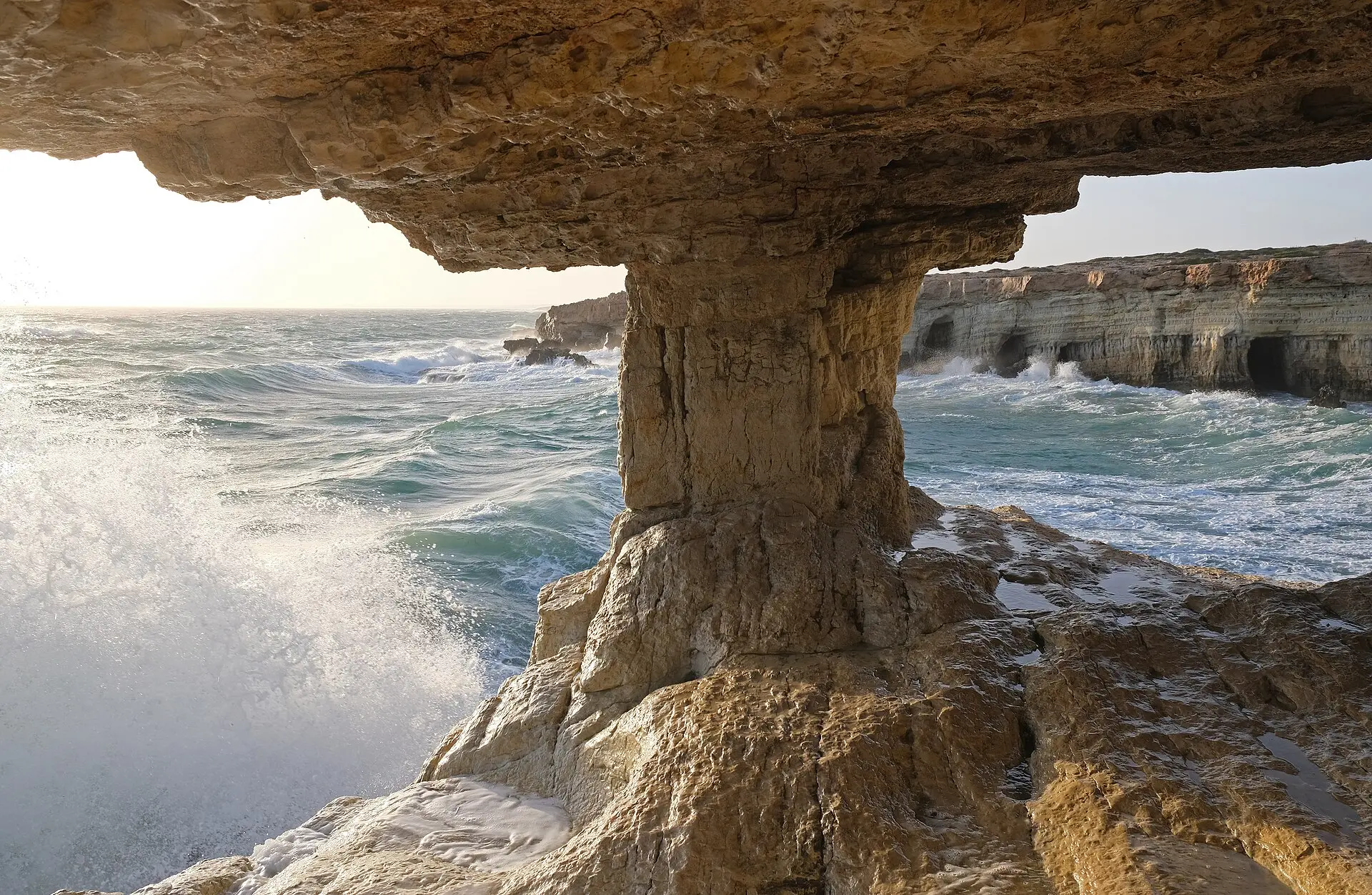
| Larnaca and Choirokoitia | salt lake with flamingos in winter, Neolithic settlement (World Heritage 1998) | LCA, bus 425 | Choirokoitia is on a slope; in a wheelchair only the reconstructed huts are accessible |
| Ayia Napa, Protaras, Cape Greco | seaside resorts, natural forest park with cliffs and caves | LCA, Kapnos from €13 (as of 28 June 2026) | Kapnos does not guarantee seats on the same day |
Swipe the table sideways to see all columns.
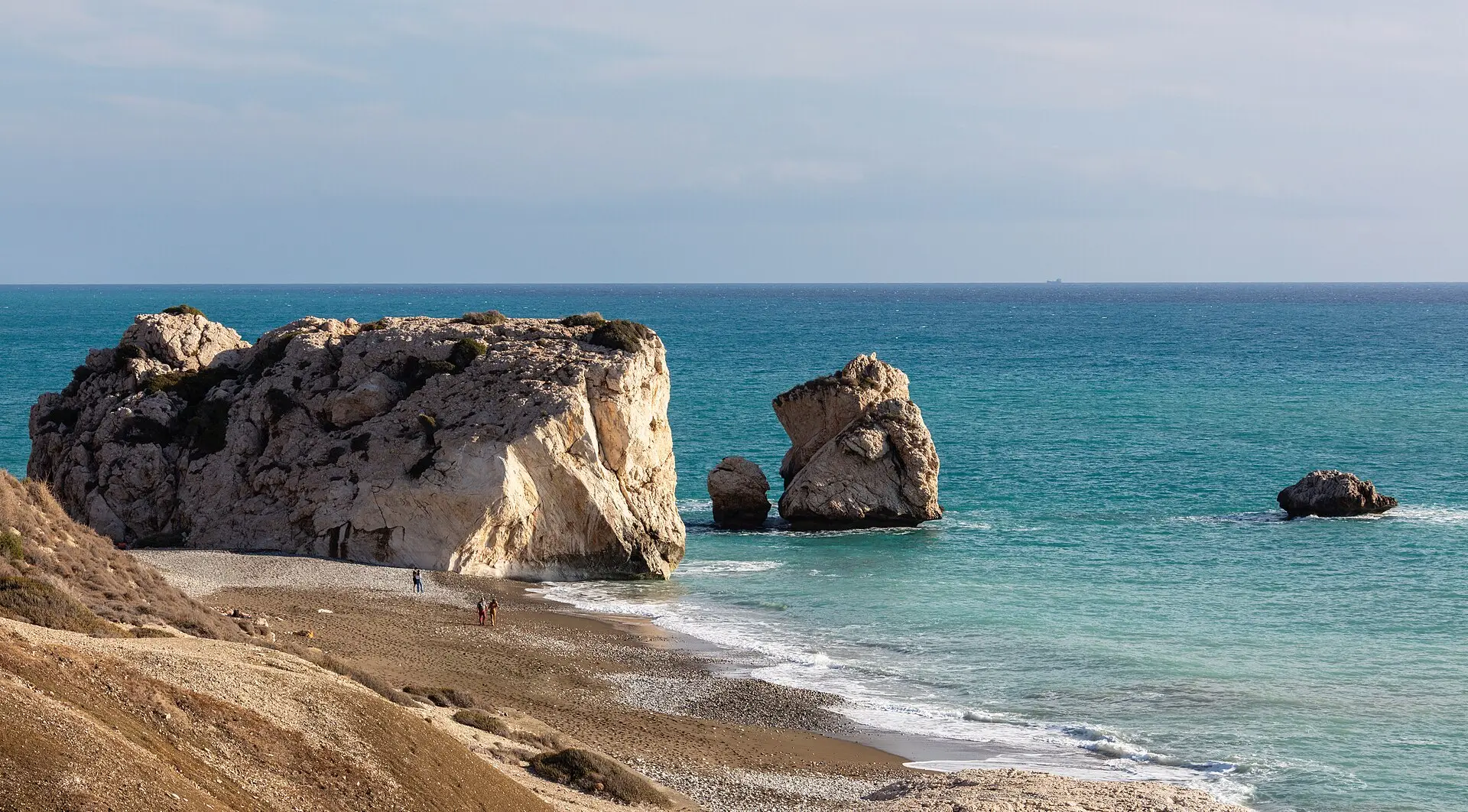
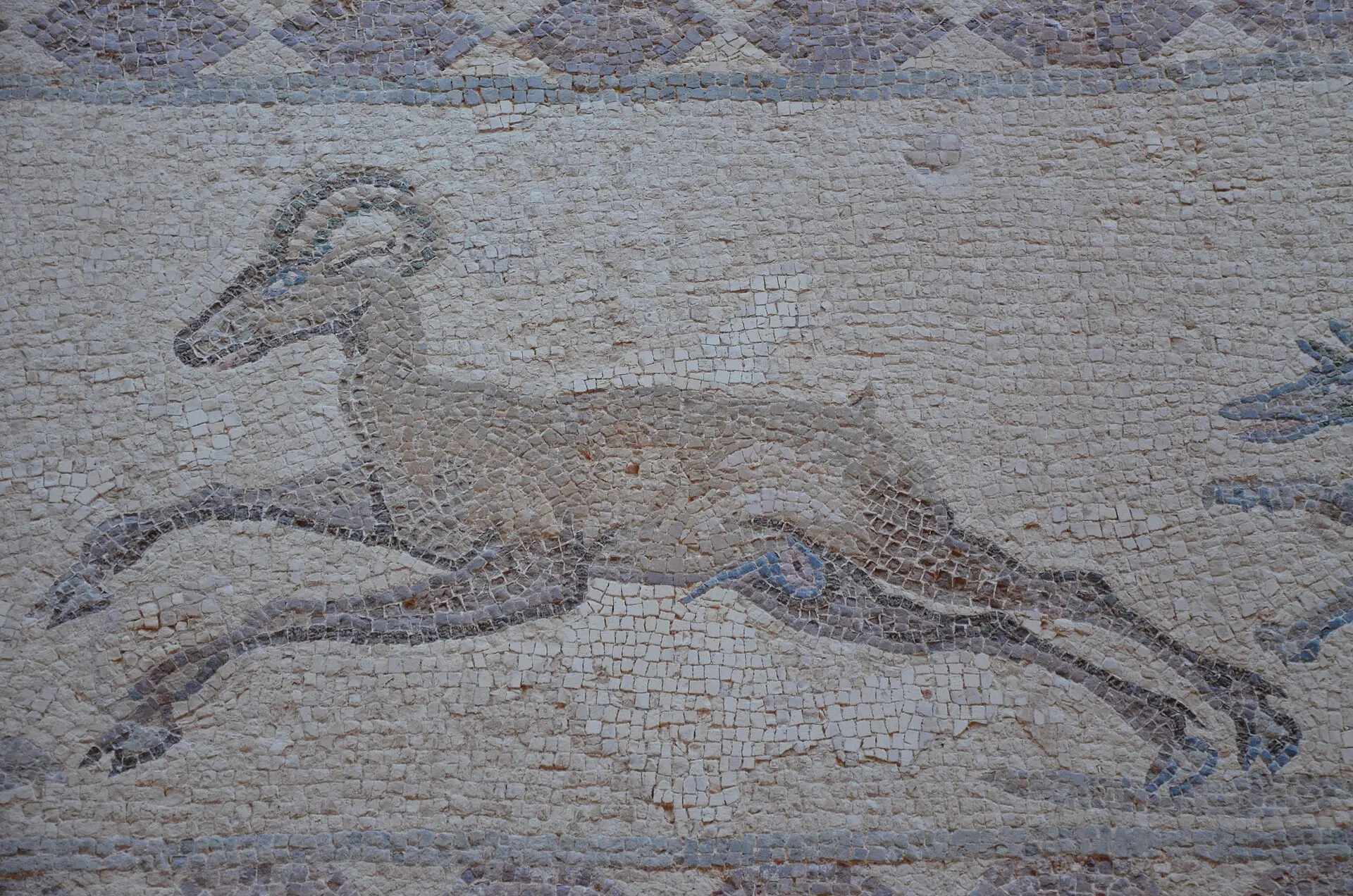
Nea Pafos was founded at the end of the 4th century BC and was the island's capital under the Ptolemies and Romans. The House of Dionysus covers 2,000 m², of which 556 m² have floor mosaics: hunting, grape harvest and scenes from mythology. The Tombs of the Kings from the 3rd century BC contain no kings; the name alludes to the magnificent complexes. According to legend, Aphrodite was born at the rock Petra tou Romiou.
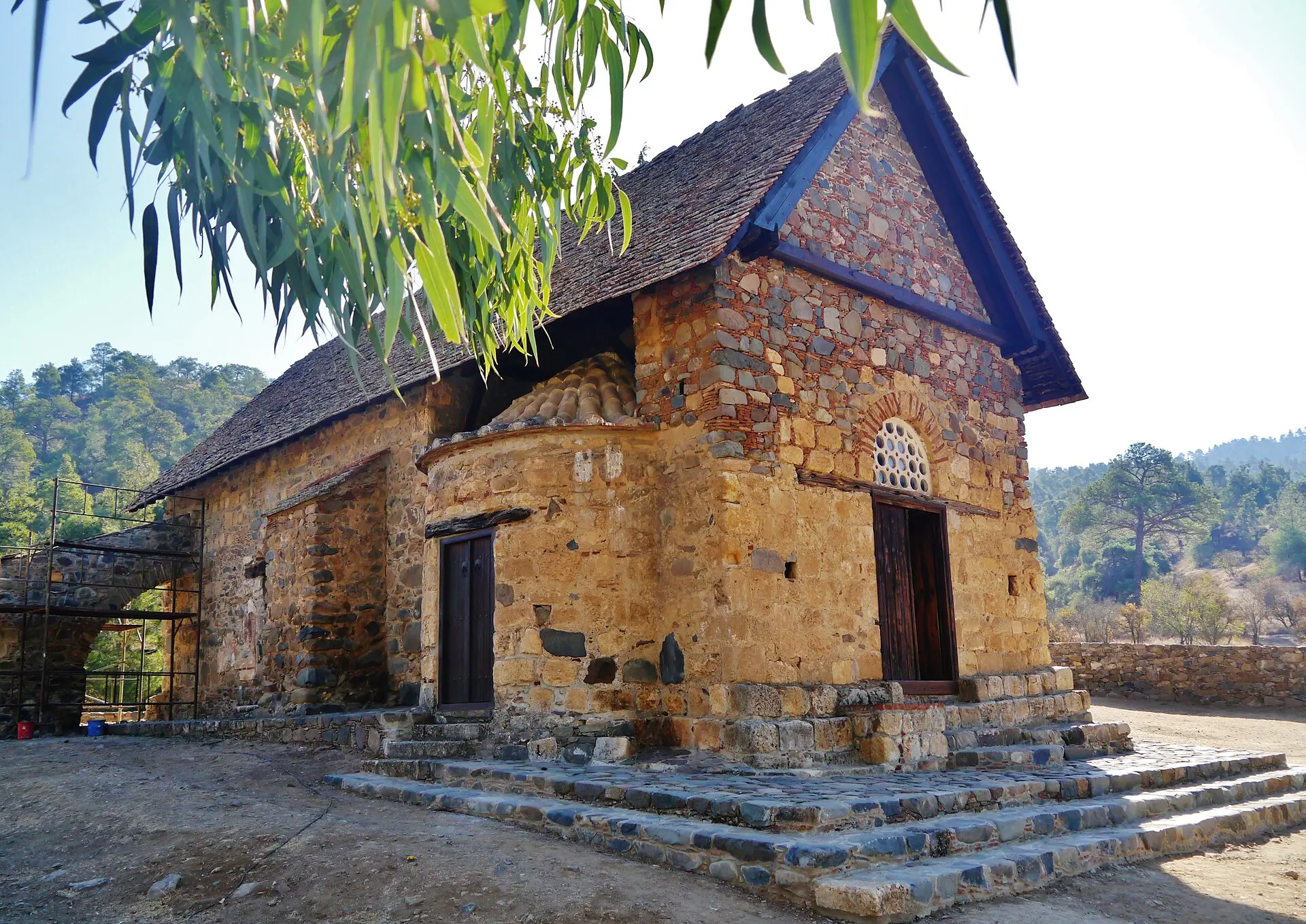
Limassol has the island's most important port. The Kourion excavation site lies on a coastal hill, 4 km south-west of the village of Episkopi. The sweet Commandaria comes from the wine villages on the southern slopes of the Troodos. In the mountains themselves stand the ten World Heritage churches from the Byzantine and post-Byzantine periods, such as Panagia tis Asinou near Nikitari and Agios Nikolaos tis Stegis in Kakopetria.
The old town of Nicosia lies within a ring of Venetian walls whose bastions are shaped like hearts. The Cyprus Museum is open Tuesday to Sunday, until 20:00 on the first Wednesday of every month, and is free of charge according to the Department of Antiquities (as of September 2026). In Larnaca stand the church of Agios Lazaros and the Hala Sultan Tekke mosque. Hand-embroidered lace and silver filigree come from the mountain village of Lefkara.
Best time to visit
Averages 2002–2011 (WMO, data from the Cyprus weather service) for Nicosia-Athalassa inland (162 m) and Larnaca airport on the coast (1.69 m). Per month: mean maximum and minimum in °C, precipitation in mm.
| Month | Nicosia | Larnaca |
|---|---|---|
| January | 15.7 / 5.8 / 65.0 | 17.4 / 8.0 / 102.0 |
| February | 16.3 / 6.0 / 50.1 | 17.7 / 7.8 / 61.1 |
| March | 20.1 / 7.8 / 27.2 | 20.2 / 9.1 / 26.8 |
| April | 24.3 / 10.9 / 22.5 | 23.0 / 12.0 / 16.3 |
| May | 29.6 / 15.2 / 38.0 | 26.9 / 16.1 / 10.6 |
| June | 34.3 / 20.0 / 15.0 | 30.8 / 20.1 / 1.6 |
| July | 37.5 / 22.7 / 3.5 | 33.2 / 22.6 / 0.9 |
| August | 37.5 / 22.7 / 0.8 | 33.5 / 23.0 / 0.6 |
| September | 33.6 / 19.5 / 15.9 | 31.4 / 20.5 / 9.0 |
| October | 28.8 / 15.9 / 25.8 | 28.3 / 17.4 / 11.6 |
| November | 22.6 / 10.6 / 22.9 | 23.4 / 12.9 / 32.5 |
| December | 17.8 / 7.3 / 55.4 | 19.2 / 9.8 / 80.9 |
Swipe the table sideways to see all columns.
From June to September, Nicosia gets 35.2 mm of rain in total and Larnaca 12.1 mm. On the coast the maximum in July and August stays about 4 °C below Nicosia (both our own calculation). According to the Deputy Ministry of Tourism, the open sea is warmer than 22 °C from June to November. It rains more in the Troodos: Prodromos gets 805.4 mm a year, 2.4 times as much as Nicosia (our own calculation).
In July 2026 the weather service reported a heatwave for the interior on eleven days (our own count) and measured 43.2 °C at Athalassa. Many fires broke out in the same month, and August 2026 was then the wettest August since 1901.
Getting around the country
Bus instead of train
There are no rails in Cyprus, neither railway nor metro. Intercity buses run between the cities; village buses often only two or three times a day (as of September 2026). Some intercity routes (fare since 1 April 2025, journey time according to the operator, as of January to March 2026):
- Nicosia–Limassol: about 1 h 45 min, single €6.
- Nicosia–Paphos: about 2 hours, single €8.
- Limassol–Paphos: about 1 h 15 min, single €5.
On the intercity bus you pay in cash, and the driver sells only single journeys and paper monthly passes. At Cyprus Public Transport, the network pass for Nicosia, Larnaca, Limassol, Paphos and the Famagusta district has cost €20 a day since 3 August 2026.
Tip
Plastic card: cheaper from the eighth city bus journey
The Cyprus Public Transport plastic card costs €5.00 once. After that you pay €2.00 instead of €2.70 in cash on the city bus, and at night €3.50 instead of €4.70 (fare since 3 August 2026). On daytime journeys you have recouped the fee from the eighth journey (our own calculation).
Car, taxi and roads
In Cyprus you drive on the left. Four-lane motorways lead from Nicosia to the coast at Limassol, Larnaca, Paphos and Ayia Napa. According to the Deputy Ministry of Tourism, a maximum of 100 and a minimum of 65 km/h apply there, on other roads 80 and in towns mostly 50 km/h. ADAC gives a differing 65 km/h for country roads (as of September 2026). The limit is 0.5 per mille; phone at the wheel only with a hands-free system.
According to ADAC, a German driving licence is enough. If you are under 25 and have held your licence for less than three years, say so when hiring; the hire company then insures you separately. In town centres you pay €1 to €2 per hour at the parking meter on weekdays during office hours (as of September 2026).
Caution
Hire car: insured only in the Republic's territory
According to the Deputy Ministry of Tourism, the insurance of a hire car in Cyprus covers only journeys in the part of the island that the Republic of Cyprus controls (as of September 2026).
City taxis run with a taximeter: from 6:01 to 20:30, €3.80 base fare and €0.95 per kilometre, at night €4.80 and €1.10. For 10 km without luggage you therefore pay €13.30 by day and €15.80 at night (our own calculation, as of September 2026).
Car hire Cyprus: Larnaca Airport (LCA)Latest price sample for each car class and rental company, plus the search for your travel dates.Money and costs
Cyprus has belonged to the eurozone since 1 January 2008. Credit cards work mainly in the big cities and resorts, with Visa and Mastercard the most widespread. A reduced VAT rate of 9% applies to hotel stays, restaurants and taxis, and tipping is voluntary (as of September 2026). The table gives prices from operators and authorities; the food prices are averages from the Deputy Ministry of Tourism.
| Item | Price | As of |
|---|---|---|
| City bus Cyprus Public Transport, cash / plastic card | €2.70 / €2.00 | since 3 August 2026 |
| Network pass all cities, one day | €20 | since 3 August 2026 |
| City bus Paphos, single / day ticket | €2.00 / €6.50 | September 2026 |
| Limassol Airport Express | €10 | September 2026 |
| Intercity Nicosia–Paphos | €8 | fare since 1 April 2025 |
| Nea Pafos, Kourion, Palaipafos | €4.50 each | September 2026 |
| Tombs of the Kings, Choirokoitia | €2.50 each | September 2026 |
| Meze dinner in a taverna | €28 | March 2025 |
| Cappuccino | €4.00–4.50 | March 2025 |
Swipe the table sideways to see all columns.
Tip
Excavations: open until 17:00 in the winter half-year
The state sites of Cyprus follow winter hours from 16 September to 15 April. Nea Pafos, the Tombs of the Kings, Kourion and Choirokoitia then open from 8:30 to 17:00, in summer until 19:30 (as of September 2026). The only closing day of the major sites and museums during Holy Week is Easter Sunday.
Practical information
Clocks in Cyprus are one hour ahead all year round. Many people understand English; the official languages are Greek and Turkish. The emergency number is 112, the country code 00357. Because Cyprus belongs to the EU, you phone and use data at the prices of your home tariff (as of September 2026).
According to the Ministry of Finance, most sockets are built for three-pin plugs with rectangular pins (as of 2012); for German plugs you need a travel adapter, according to ADAC. Public holidays from October 2026 are 1 October (Independence Day), 28 October and 24 to 26 December. In seaside resorts many shops are also open on public holidays; otherwise authorities, banks and shops are closed then. Exception: on Christmas Eve the banks open.
What applies to entry, safety and health, including for the northern part of the island, is in the travel and safety advice of the German Foreign Office.
Entry requirements and safety
The rules that apply are published by the German Federal Foreign Office — always up to date there.
Travel and safety advice: Cyprus (in German) (opens in a new tab)Who Cyprus is not for
- Anyone who doesn't cope well with heat: In Nicosia the mean daily maximum in July and August is 37.5 °C, and in July 2026 the weather service measured 43.2 °C.
- Anyone who wants to get around quickly without a car: There are no trains; the bus from Nicosia to Paphos takes about two hours.
- Anyone who doesn't like driving on the left: Traffic drives on the left in Cyprus, and the road signs are on the left too.
- Anyone who wants to drive around the whole island in a hire car: The insurance applies only in the area under the control of the Republic, and in the northern part EU law is also suspended.
- Anyone who wants bathing weather in winter: In Larnaca an average of 102 mm of rain falls in January, and the sea is then 16 to 17 °C according to the Deputy Ministry of Tourism.
- Anyone who relies on calm summer weather: According to the weather service, many fires broke out in July 2026; the worst burned 120 hectares.
Sources and last update
- Statistical report: air traffic at main airports, July 2026, table 46421-09 “Boarding passengers by destination airport (last known destinations)” (Federal Statistical Office (Destatis), in German) (opens in a new tab), accessed 27 September 2026
- Cyprus: travel and safety advice (German Foreign Office, in German) (opens in a new tab), accessed 27 September 2026
- Public Transportation (Hermes Airports) (opens in a new tab), accessed 27 September 2026
- Airport Facts – Infrastructure & Operations (Hermes Airports) (opens in a new tab), accessed 27 September 2026
- Line map 425 Larnaca Airport – Dekelia, PDF (Cyprus Public Transport) (opens in a new tab), accessed 27 September 2026
- Ticket Fares, Ticketing policy effective from 3rd of August 2026 (Cyprus Public Transport) (opens in a new tab), accessed 27 September 2026
- Tickets & Smart Cards (Pafos Buses, OSYPA Ltd) (opens in a new tab), accessed 27 September 2026
- Route 612 Tombs of the Kings Bus Station – Paphos Airport (Pafos Buses) (opens in a new tab), accessed 27 September 2026
- Route 613 Karavela Station – Paphos Airport (Pafos Buses) (opens in a new tab), accessed 27 September 2026
- Route 645 Polis Chrysochous – Paphos (Karavela) (Pafos Buses) (opens in a new tab), accessed 27 September 2026
Show all 53 sources
- Limassol Airport Express – home page and fares (opens in a new tab), accessed 27 September 2026
- Larnaca Airport Transfer to Ayia Napa: Prices, Pickup and Drop-Off Points (Kapnos Airport Shuttle, 28 Jun 2026) (opens in a new tab), accessed 27 September 2026
- Transportation (Deputy Ministry of Tourism, visitcyprus.com) (opens in a new tab), accessed 27 September 2026
- Time, Working Hours & Holidays (Deputy Ministry of Tourism, visitcyprus.com) (opens in a new tab), accessed 27 September 2026
- Money & Currency (Deputy Ministry of Tourism, visitcyprus.com) (opens in a new tab), accessed 27 September 2026
- Health & Safety (Deputy Ministry of Tourism, visitcyprus.com) (opens in a new tab), accessed 27 September 2026
- Climate & Weather (Deputy Ministry of Tourism, visitcyprus.com) (opens in a new tab), accessed 27 September 2026
- Languages & Religions (Deputy Ministry of Tourism, visitcyprus.com) (opens in a new tab), accessed 27 September 2026
- Communications (Deputy Ministry of Tourism, visitcyprus.com) (opens in a new tab), accessed 27 September 2026
- Troodos Region (Deputy Ministry of Tourism, visitcyprus.com) (opens in a new tab), accessed 27 September 2026
- The Larnaka (Larnaca) Region (Deputy Ministry of Tourism, visitcyprus.com) (opens in a new tab), accessed 27 September 2026
- The Lemesos (Limassol) Region (Deputy Ministry of Tourism, visitcyprus.com) (opens in a new tab), accessed 27 September 2026
- The Pafos (Paphos) Region (Deputy Ministry of Tourism, visitcyprus.com) (opens in a new tab), accessed 27 September 2026
- The Ammochostos (Famagusta) Region (Deputy Ministry of Tourism, visitcyprus.com) (opens in a new tab), accessed 27 September 2026
- Lefkosia (Nicosia) City (Deputy Ministry of Tourism, visitcyprus.com) (opens in a new tab), accessed 27 September 2026
- Cyprus – Properties inscribed on the World Heritage List (UNESCO World Heritage Centre) (opens in a new tab), accessed 27 September 2026
- Nea Pafos (Kato Pafos) (Department of Antiquities, Deputy Ministry of Culture) (opens in a new tab), accessed 27 September 2026
- Tombs of the Kings (Department of Antiquities) (opens in a new tab), accessed 27 September 2026
- Kourion (Department of Antiquities) (opens in a new tab), accessed 27 September 2026
- Choirokoitia (Khirokitia) (Department of Antiquities) (opens in a new tab), accessed 27 September 2026
- Cyprus Museum, Lefkosia (Department of Antiquities) (opens in a new tab), accessed 27 September 2026
- Palaipafos (Kouklia) (Department of Antiquities) (opens in a new tab), accessed 27 September 2026
- Opening hours of museums, monuments & archaeological sites, XLS (Department of Antiquities) (opens in a new tab), accessed 27 September 2026
- Unesco Monuments (Department of Antiquities) (opens in a new tab), accessed 27 September 2026
- World Weather Information Service: Nicosia (Athalassa), climate data (WMO; data: Department of Meteorology Cyprus) (opens in a new tab), accessed 27 September 2026
- World Weather Information Service: Larnaka Airport, climate data (WMO) (opens in a new tab), accessed 27 September 2026
- World Weather Information Service: Paphos Airport, climate data (WMO) (opens in a new tab), accessed 27 September 2026
- World Weather Information Service: Prodromos, climate data (WMO) (opens in a new tab), accessed 27 September 2026
- OSCAR/Surface – station search Cyprus, station elevations (WMO) (opens in a new tab), accessed 27 September 2026
- Monthly Weather Report July 2026, PDF (Department of Meteorology, Cyprus) (opens in a new tab), accessed 27 September 2026
- Monthly Weather Report August 2026, PDF (Department of Meteorology, Cyprus) (opens in a new tab), accessed 27 September 2026
- Limassol – Paphos, archived copy of 5 Mar 2026 (Intercity Buses) (opens in a new tab), accessed 27 September 2026
- Nicosia – Limassol, archived copy of 19 Jan 2026 (Intercity Buses) (opens in a new tab), accessed 27 September 2026
- Nicosia – Paphos, archived copy of 17 Feb 2026 (Intercity Buses) (opens in a new tab), accessed 27 September 2026
- Larnaca – Nicosia, archived copy of 23 Jun 2025 (Intercity Buses) (opens in a new tab), accessed 27 September 2026
- Routes and Timetables, archived copy of 30 Aug 2026 (Intercity Buses) (opens in a new tab), accessed 27 September 2026
- Cyprus – overview (European Union, in German) (opens in a new tab), accessed 27 September 2026
- Roaming: what you pay for using your smartphone in another EU country (Your Europe, European Union, in German) (opens in a new tab), accessed 27 September 2026
- Cyprus: everything on speed limits, left-hand traffic and driving licence (ADAC, in German) (opens in a new tab), accessed 27 September 2026
- Cyprus: good to know (ADAC, in German) (opens in a new tab), accessed 27 September 2026
- Practical Information, Joint HRWG-IPSG Meeting 2012, PDF (Ministry of Finance, Republic of Cyprus) (opens in a new tab), accessed 27 September 2026
- This is Us: concession for Larnaca and Paphos airports (Hermes Airports) (opens in a new tab), accessed 28 September 2026
- Main Bus Stations (Pafos Buses, OSYPA Ltd) (opens in a new tab), accessed 28 September 2026
Information last checked on 28 September 2026.
Found a mistake? Write to us — we’ll correct it and note it here.